
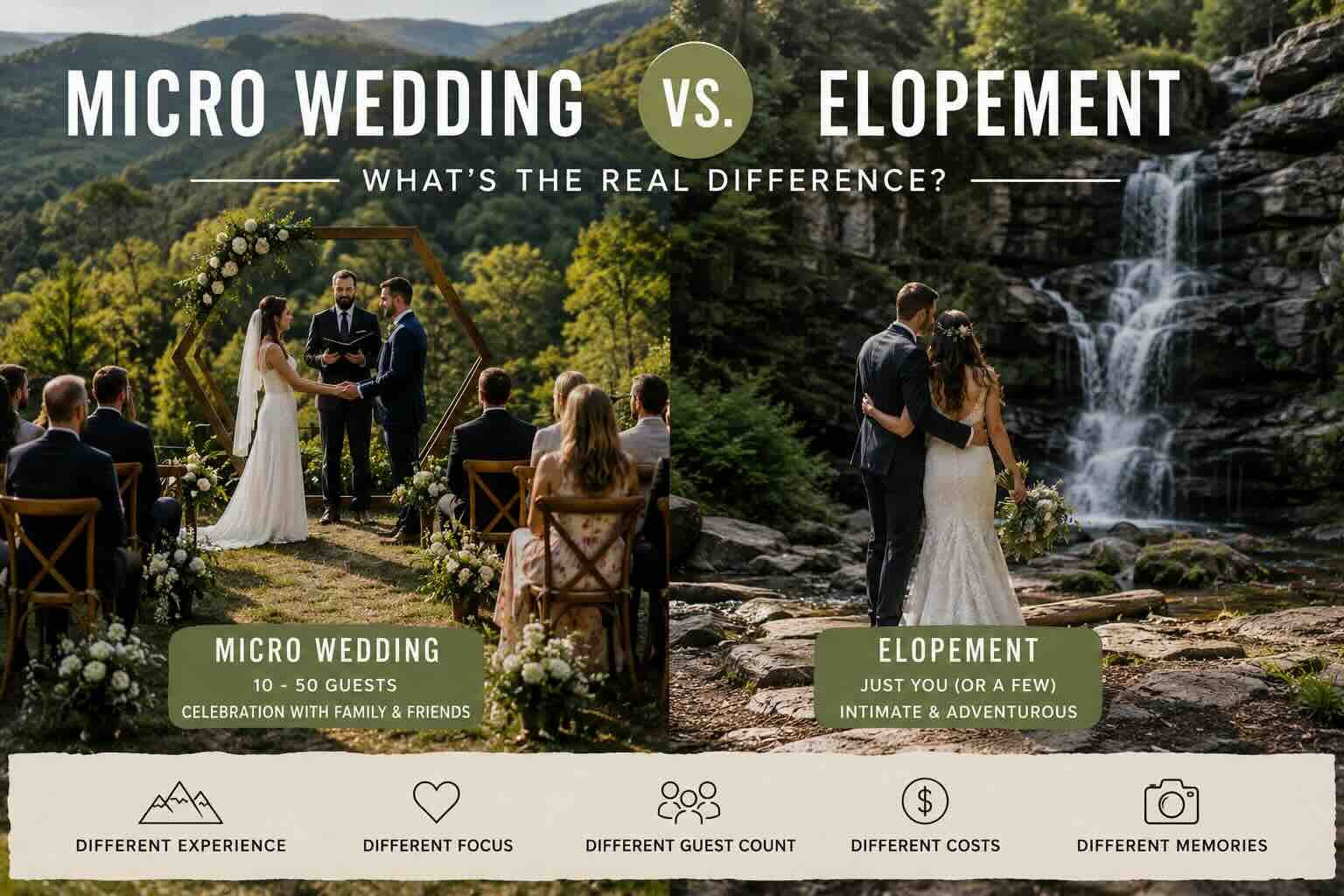
The short version: an elopement is about the two of you. A micro wedding is about the two of you plus the people you most want standing with you. That distinction sounds simple, but it changes almost everything about how the day feels.
A ceremony at Windows & Weddings Over Waterfalls, Hot Springs NC
What Is an Elopement?
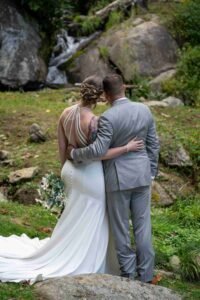
When the scenery matches the feeling
An elopement is an intentionally intimate ceremony — traditionally just the two of you, though the definition has broadened to include a photographer, officiant, and sometimes a small handful of witnesses or close family. What hasn’t changed is the essential character: an elopement is private, unhurried, and focused almost entirely on the couple rather than on hosting a gathering.
Elopements can happen almost anywhere — a waterfall, a mountain overlook, a forest clearing, a private venue, even a courthouse. The legal requirements are the same as any wedding: a licensed officiant and the appropriate paperwork. The production requirements are minimal by design.
The reasons couples choose to elope tend to cluster around a few themes: the desire for something genuinely private, discomfort with being the center of a large event, wanting to keep costs contained, or simply preferring the experience of the day to feel personal rather than performative. None of those are lesser reasons. They’re just honest ones.
If you’re considering a private venue for an elopement, our guide to having a wedding at an Airbnb covers what to know about that format specifically.
What Is a Micro Wedding?
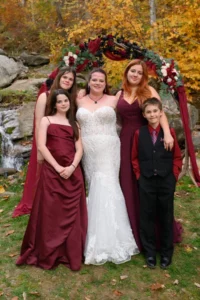
Your arbor goes wherever the moment calls for it
A micro wedding keeps most of the traditional wedding elements — ceremony, reception, dinner, flowers, music, attire, toasts — but scales the guest count down to the people who actually matter. Most micro weddings land between 15 and 30 guests, though some couples go as small as 10.
The micro wedding vs elopement distinction isn’t really about size — it’s about the presence of guests and what that changes about the day. Once you’re hosting people, even a small number, the focus shifts. You’re still celebrating your marriage, but you’re also sharing that celebration with others, which creates warmth and connection that an elopement by definition doesn’t have.
This is exactly why micro weddings have grown so quickly in popularity. You get the emotion, the ceremony, the toasts, and the feeling of being surrounded by people you love — without the scale, expense, and logistical weight of a traditional 150-person wedding. For a detailed look at what micro weddings cost in this region, our guide to micro wedding cost in North Carolina breaks down where the money typically goes.
The Real Difference: Focus
When couples work through the micro wedding vs elopement decision, cost usually comes up first. But cost is rarely the actual deciding factor. The real difference is focus — what the day is centered around and who it’s for.
An elopement is focused almost entirely on the couple. The ceremony is quiet, the experience is personal, and there’s very little that needs to be managed or coordinated. The day can be spontaneous, unhurried, and genuinely private in a way that no event with guests can be.
A micro wedding is still centered on the couple, but the circle has expanded. The energy changes when guests arrive — not negatively, but noticeably. You’re thinking about whether your parents found their seats, whether the food is ready, whether the timeline is holding. You’re receiving hugs and toasts. The day feels celebratory in a way that an elopement typically doesn’t.
Neither is better. They produce different emotional experiences, and which one fits depends on what you actually want to feel when you look back on the day.
What Changes When Guests Enter the Picture
The micro wedding vs elopement line is most clearly visible in what happens once guests are present. Even a small number of people — 10, 15, 20 — transforms the day from a personal experience into a hosted event. That’s not a criticism. It’s just accurate.
With guests, you’re now thinking about seating, food, timing, parking, and flow. You’re coordinating with vendors around a schedule that accounts for people who need direction. The day requires more planning, more communication, and more structural decisions — even if everything is simplified compared to a traditional wedding.
An elopement removes most of that. The tradeoff is that you also remove the hugs afterward, the shared dinner, the toasts from the people who know you best. Some couples find that tradeoff obvious in one direction. Others find it genuinely difficult to decide.
A useful way to think about it: an elopement asks “how private do we want to feel?” A micro wedding asks “who do we most want standing with us when this happens?”
Guest Count Is the Clearest Signal
Guest count is the practical way to understand the micro wedding vs elopement difference — though the numbers matter less than what the numbers represent.
An elopement typically involves just the couple, or the couple plus a handful of people who could fit around a small table. Once the list starts growing — parents, siblings, a best friend or two — most couples realize they’re no longer planning an elopement. They’re planning a micro wedding. That evolution is completely normal. The important thing is to be honest about what you actually want rather than forcing the day into a label that doesn’t fit.
Some couples start planning an elopement and end up with 20 guests. Some plan a micro wedding and end up trimming the list until it feels like an elopement. Both outcomes are fine. The label matters less than the experience you’re designing.
Which One Is More Relaxed?
In the micro wedding vs elopement comparison, elopements are generally the more relaxed format — fewer people, fewer decisions, less to coordinate. There’s simply less that can go wrong and less that needs to be managed in real time.
But a well-designed micro wedding can still feel remarkably calm, particularly in the right setting. A 20-person mountain ceremony at a private waterfall venue feels different from a 20-person event in a traditional event space with a strict timeline. The environment does work that coordination can’t. This is one reason intimate mountain weddings in Western North Carolina work so well for both formats — the setting creates a sense of peace and presence that carries the day without requiring much production.
Why Western North Carolina Works for Both
The mountains around Asheville and Hot Springs offer waterfalls, private outdoor venues, forest settings, and layered mountain views — destination-quality scenery without requiring international travel. These conditions work equally well for elopements and micro weddings because the environment creates atmosphere before you add anything else.
At Weddings Over Waterfalls in Hot Springs, NC, multiple waterfalls cascade the full length of the private property, with moss-covered pathways and hiking trails running along both sides of the creek and benches positioned at each waterfall. Couples eloping use the creekside island, forest clearings, and moss paths for an intimate ceremony with no production required. Couples planning a micro wedding add the 24×24 reception platform, 20×20 pavilion tent, professional sound system, and on-site cabin with 38 windows and two fire pits — hosting up to 30 guests without leaving the property.
The setting doesn’t require production to feel significant. Nighttime lighting illuminates the creek, giant boulders, and waterfalls after dark — which is why both formats tend to feel genuinely memorable here in ways that more produced events sometimes don’t.
For couples ready to look at specific options, the pricing page covers both formats, and the guide to all-inclusive packages explains how the fully bundled experience works for both elopements and micro weddings.
Still weighing whether to elope at all? Our guide on how to elope covers the process from start to finish, and our guide to waterfall weddings and intimate ceremonies covers what that specific setting experience involves.
Not Getting Married Here? You Can Still Experience It
Even if you choose a different venue, you can still experience the waterfalls, forest, and privacy of the property through a stay at Windows Over Waterfalls.
Plan a Romantic Getaway Instead
Airbnb designates this as a top 10% home — their designation, not ours · Guest Favorite · Superhost
What Airbnb Guests Are Saying
★ 4.97
254 Five-Star Reviews
Read the reviews there, then book direct here and skip Airbnb’s guest service fee.
As of October 2026 — and still growing.