


Micro wedding cost is one of the most common questions couples have when they first start exploring intimate ceremonies. The short answer: a micro wedding typically costs between $3,000 and $15,000 depending on guest count, location, and what’s included. That’s a wide range — and the variables that drive it are worth understanding before you start getting quotes.
This guide breaks down micro wedding cost by category, explains what drives prices up and down, and shows why micro weddings consistently deliver more value per dollar than traditional large weddings.
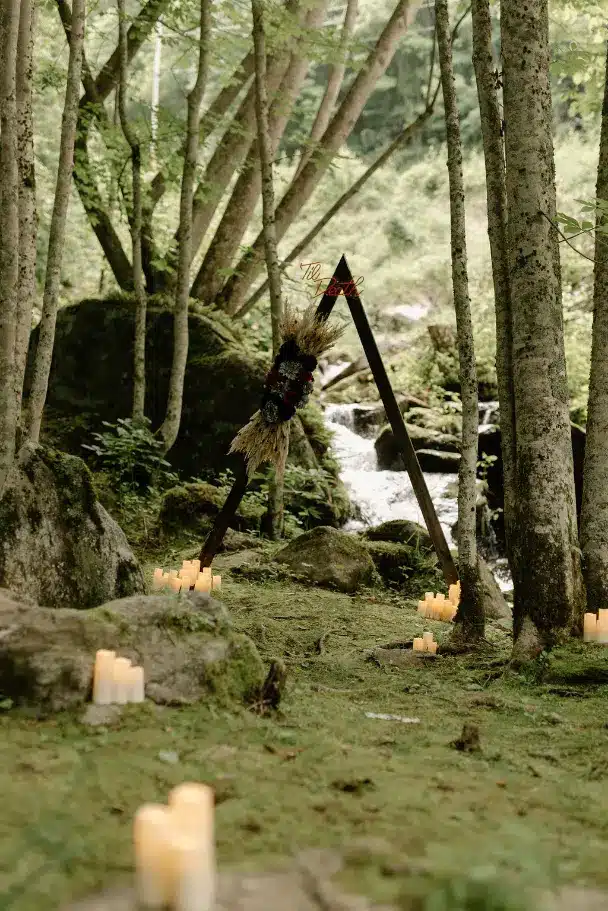
A ceremony at Windows & Weddings Over Waterfalls, Hot Springs NC
What Is a Micro Wedding and How Does It Affect Cost?
A micro wedding is typically defined as a ceremony with 20 to 30 guests or fewer. The guest count is the single biggest driver of micro wedding cost. Every additional guest adds catering, seating, and coordination expenses that compound quickly. Keep the list tight and the cost structure changes dramatically.
Micro weddings also tend to use fewer vendors than traditional weddings. A coordinated team of photographer, officiant, and florist is often sufficient — no DJ, no catering team of 15, no lighting crew. That reduction in vendor complexity is where much of the micro wedding cost savings come from.
Micro Wedding Cost Breakdown by Category
Venue
Micro wedding venue costs range from under $1,000 for a private outdoor property to $3,000 or more for a full-service event space. Nature-based venues — private waterfall properties, mountain settings, forest ceremony sites — tend to offer the best value because the setting provides atmosphere that traditional event spaces charge a premium to manufacture.
Photography
Photography is typically the largest single line item in a micro wedding budget. Expect $1,500 to $3,500 for an experienced photographer covering 1 to 4 hours. For micro weddings, shorter coverage packages are usually sufficient — you’re not managing a 200-person reception timeline.
Officiant
A professional officiant for a micro wedding typically costs $250 to $500, including ceremony preparation and marriage license filing. This is one of the most important hires — the officiant shapes the emotional experience of the ceremony more than almost any other vendor.
Florals
Micro wedding florals — bridal bouquet, boutonniere, and ceremony arrangements — vary significantly by florist and style. At outdoor venues with strong natural settings, floral investment can be kept minimal because the environment provides visual context that indoor spaces don’t.
Catering
Micro wedding catering varies more than any other cost category. Options range from a simple cake-and-champagne ceremony at under $300 to a fully served private chef dinner. In western NC, couples can find local caterers starting around $20 to $30 per person for casual family-style service, scaling up to $90 or more per person for individually plated meals. Many micro wedding couples opt for a relaxed outdoor dinner rather than formal catered reception service — and in the mountains, that format tends to fit the day better anyway.
Hair and Makeup
Professional hair and makeup for a micro wedding varies by location and travel. In western NC, expect $650 to $750 for the bride alone due to artist travel to mountain venues — with additional costs for bridesmaids or the wedding party. It’s worth asking upfront whether hair and makeup is included in any package you’re considering, as not all venues offer it.
Lodging
For destination micro weddings, lodging costs vary widely depending on the property and time of year. Some all-inclusive packages include on-site lodging — which eliminates this as a separate cost and often makes the total package price more competitive than it first appears.
Average Micro Wedding Cost by Guest Count
At most venues, micro weddings fall into two broad categories:
- Elopements (2–10 guests) — $2,500 to $8,000 depending on inclusions and destination
- Micro weddings (up to 30 guests) — $6,000 to $18,000 depending on guest count, catering, and vendor selection
These ranges assume a complete experience — venue, photography, officiant, florals, and some form of catering. Bare-bones ceremonies with minimal services can come in well below these figures. All-inclusive packages with premium vendors and lodging sit toward the upper end.
How All-Inclusive Packages Affect Micro Wedding Cost
All-inclusive micro wedding packages change the cost equation significantly. Instead of sourcing each vendor independently, a bundled package covers photography, officiant, florals, coordination, and sometimes hair, makeup, and lodging in one price.
 At private mountain venues in North Carolina, all-inclusive micro wedding packages start at $7,750. That includes:
When you price those services independently — photographer $2,500, officiant $350, coordinator $900, hair and makeup $650–$750 per artist, plus lodging — the all-inclusive price often comes in at or below the sum of parts. For couples asking how much a micro wedding costs, the all-inclusive answer is frequently the most efficient one.
For a full breakdown of what’s included at different price points, our guide to all-inclusive wedding packages in North Carolina covers the specifics.
See Exactly What a Micro Wedding Costs at a Private Waterfall
Full pricing for micro weddings and elopements at Weddings Over Waterfalls in Hot Springs, NC — venue-only from $250, all-inclusive micro wedding packages from $7,750.
What Drives Micro Wedding Cost Up
- Guest count creep — the most common budget killer. Every additional guest adds catering, seating, and coordination costs.
- Peak season dates — October weekends in the NC mountains cost significantly more than January weekdays at the same venue.
- Venue add-ons — setup fees, cleanup fees, and vendor access charges that aren’t in the headline rental price.
- Premium photography — experienced photographers with strong portfolios command higher rates. Worth the investment but worth budgeting for accurately.
- Destination travel — flights, rental cars, and additional nights add up for couples traveling from out of state.
What Keeps Micro Wedding Cost Down
- Tight guest list — the single most effective lever. Going from 25 to 12 guests can reduce total cost by 25 to 35 percent.
- Nature-based venues — outdoor settings that provide atmosphere without requiring production spending on décor and rentals.
- Off-peak timing — weekday dates and non-peak seasons offer real savings at most venues.
- All-inclusive packages — bundled pricing that eliminates the per-vendor markup of independent sourcing.
- Simple catering — a restaurant dinner or private chef experience costs far less than traditional catered reception service.
For more detail on where micro wedding budgets tend to get surprised, our guide to hidden wedding costs covers the line items couples consistently underestimate.
Micro Wedding Cost in North Carolina
North Carolina — particularly the Blue Ridge Mountain region — offers some of the best micro wedding value in the country. Private waterfall properties and mountain venues in western NC typically charge less than comparable venues in destination markets like Napa, Charleston, or the Outer Banks, while delivering settings that are genuinely harder to find elsewhere.
For a detailed NC-specific cost breakdown, our guide to micro wedding cost in North Carolina covers regional pricing by category.
Micro Wedding Cost: The Bottom Line
The average micro wedding cost ranges from $3,000 to $15,000 depending on guest count, location, and inclusions. Couples who choose nature-based venues, keep guest counts tight, and consider all-inclusive packages consistently find that micro wedding cost comes in lower — and the experience comes in higher — than they expected.
A private waterfall ceremony with fifteen people and a coordinated vendor team produces results that a $60,000 traditional wedding with two hundred guests rarely matches. The micro wedding cost advantage is real, and so is the experience advantage.
A Complete Micro Wedding Starting at $7,750
Weddings Over Waterfalls bundles photography, officiant, florals, coordination, and lodging into one micro wedding package at a private NC waterfall — so you know exactly what it costs before you book.
Not Getting Married Here? You Can Still Experience It
Even if you choose a different venue, you can still experience the waterfalls, forest, and privacy of the property through a stay at Windows Over Waterfalls.
Plan a Romantic Getaway Instead
Airbnb designates this as a top 10% home — their designation, not ours · Guest Favorite · Superhost
What Airbnb Guests Are Saying
★ 4.97
254 Five-Star Reviews
Read the reviews there, then book direct here and skip Airbnb’s guest service fee.
As of October 2026 — and still growing.