


How long does it take to plan a wedding? The honest answer is longer than most couples expect — and the time doesn’t go where they think it will.
Most people imagine wedding planning as a series of pleasant decisions: choosing flowers, tasting cake, picking a venue. What they discover is that each of those decisions comes with research, comparison, communication, contracts, follow-ups, and the ongoing work of making sure all the pieces are connected to each other. A traditional wedding can consume hundreds of hours of planning time, and most of it isn’t the enjoyable kind.
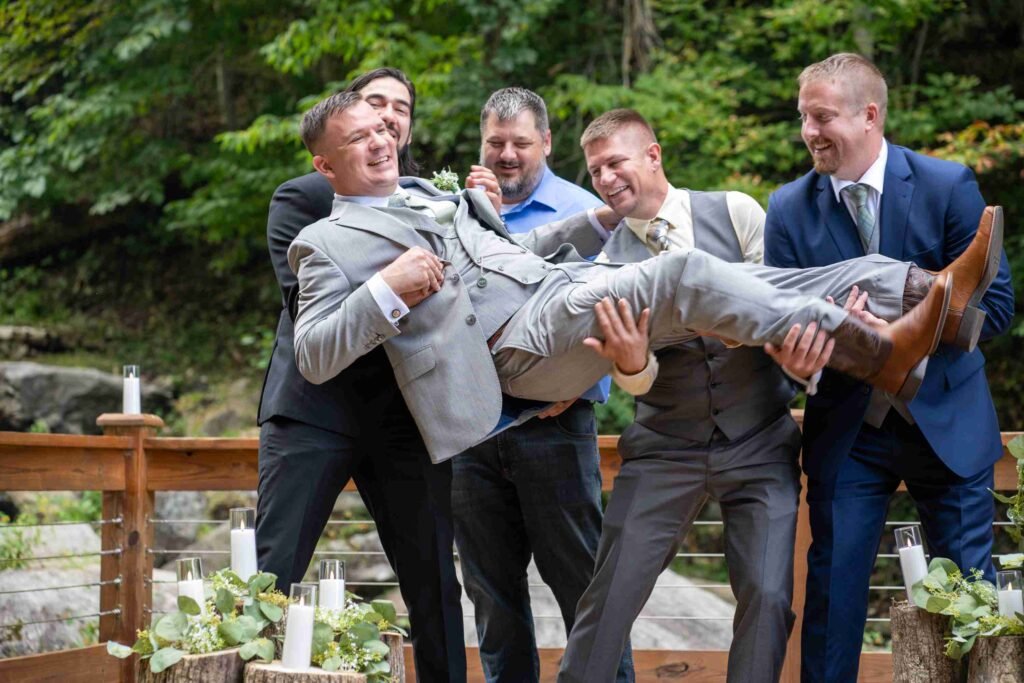
A ceremony at Windows & Weddings Over Waterfalls, Hot Springs NC
Where the Time Actually Goes
The largest portion of wedding planning time goes to vendor sourcing and coordination — not to the decisions that feel meaningful. Finding a photographer means researching portfolios, reading reviews, comparing packages, checking availability, scheduling a consultation, reviewing a contract, and signing. Then doing the same for a florist. Then an officiant. Then a caterer. Then a coordinator. Then rentals. Each vendor is its own process, and each process takes more time than it appears to on the surface.
Beyond the initial sourcing, there’s the ongoing management: the follow-up emails, the timeline confirmations, the questions that arrive a week before the wedding from vendors who haven’t talked to each other and need you to connect the dots. For couples planning from out of town, or couples managing busy schedules alongside the planning work, this phase is often where the process starts feeling genuinely overwhelming.
Smaller Weddings Take Less Time — But Not as Much Less as You’d Expect

A micro wedding or elopement has fewer guests, but it doesn’t have fewer vendor categories. You still need photography, an officiant, florals, coordination, and often hair, makeup, and catering. The scale changes. The vendor sourcing process doesn’t shrink proportionally.
The time savings of a smaller wedding come primarily from reduced catering complexity and fewer rentals — not from eliminating the work of finding and managing each professional individually. Couples who expect a micro wedding to require minimal planning often find that the planning work is nearly as extensive as a larger event; it just produces a different result.
The Hidden Cost: Coordination Overhead
How long does it take to plan a wedding also depends on how much coordination work falls on the couple. When vendors are sourced independently, the couple becomes the system that connects them. You’re the one making sure the photographer knows when florals arrive. You’re the one relaying the timeline to the caterer. You’re the one fielding the morning-of questions because the vendors have never worked together before and don’t have an established relationship to draw on.
That coordination work doesn’t show up in any estimate of how long wedding planning takes — but it’s real, and it accumulates. It’s also the work that tends to create the most decision fatigue, because it never fully ends until the day is over.
What Changes With an All-Inclusive Approach
The primary reason couples choose all-inclusive wedding packages isn’t just cost — it’s time and mental load. When the vendors are already selected, already familiar with the venue, and already used to working together, the coordination overhead largely disappears. You’re not building the system from scratch. You’re stepping into one that already runs.
That shift changes how long it takes to plan a wedding considerably. Instead of months of vendor sourcing and management, the planning process becomes a matter of choosing dates, communicating preferences, and making the smaller decisions that make the day genuinely yours. The major structure is already in place.
For couples considering this approach, our guide to what is included in all-inclusive wedding packages explains what that structure typically covers.
How Long Does It Take to Plan a Wedding at a Waterfall Venue?
At a property like Weddings Over Waterfalls, the planning timeline is shorter than a traditional wedding because the venue, the vendor team, and the day’s structure are already integrated. The waterfalls, forest, and mountain setting create the atmosphere — couples aren’t sourcing décor vendors to manufacture something the environment already provides. The vendor team has worked the property before and knows how the day flows.
For most couples planning an elopement or micro wedding here, the active planning period is considerably shorter than a traditional wedding — not because corners are being cut, but because the foundation is already built. You can see how this is structured by viewing the package details here.
If you’re also comparing costs alongside time investment, our guide to micro wedding cost in North Carolina breaks down where the budget typically goes by category.
The Real Answer
How long does it take to plan a wedding? For a traditional wedding, often a year or more of sustained effort. For a smaller wedding with independently sourced vendors, six to twelve months of meaningful work. For an all-inclusive wedding at a venue with an established team, considerably less — and with a fundamentally different emotional experience during the planning period itself.
The couples who are most satisfied with how their planning went tend to be the ones who were honest with themselves early about how much of that work they actually wanted to do.
Not Getting Married Here? You Can Still Experience It
Even if you choose a different venue, you can still experience the waterfalls, forest, and privacy of the property through a stay at Windows Over Waterfalls.
Plan a Romantic Getaway Instead
Airbnb designates this as a top 10% home — their designation, not ours · Guest Favorite · Superhost
What Airbnb Guests Are Saying
★ 4.97
254 Five-Star Reviews
Read the reviews there, then book direct here and skip Airbnb’s guest service fee.
As of October 2026 — and still growing.