


How many vendors do you need for a wedding? More than most couples expect when they start — and the number matters less than what comes with each one.
Most couples begin with the obvious: find a venue, pick a date, hire a photographer. What they discover is that each decision opens into another category, and each category requires its own research, its own contract, its own communication thread, its own place on the timeline. The question of how many vendors you need for a wedding quickly becomes less about the number and more about how much coordination you’re willing to carry.
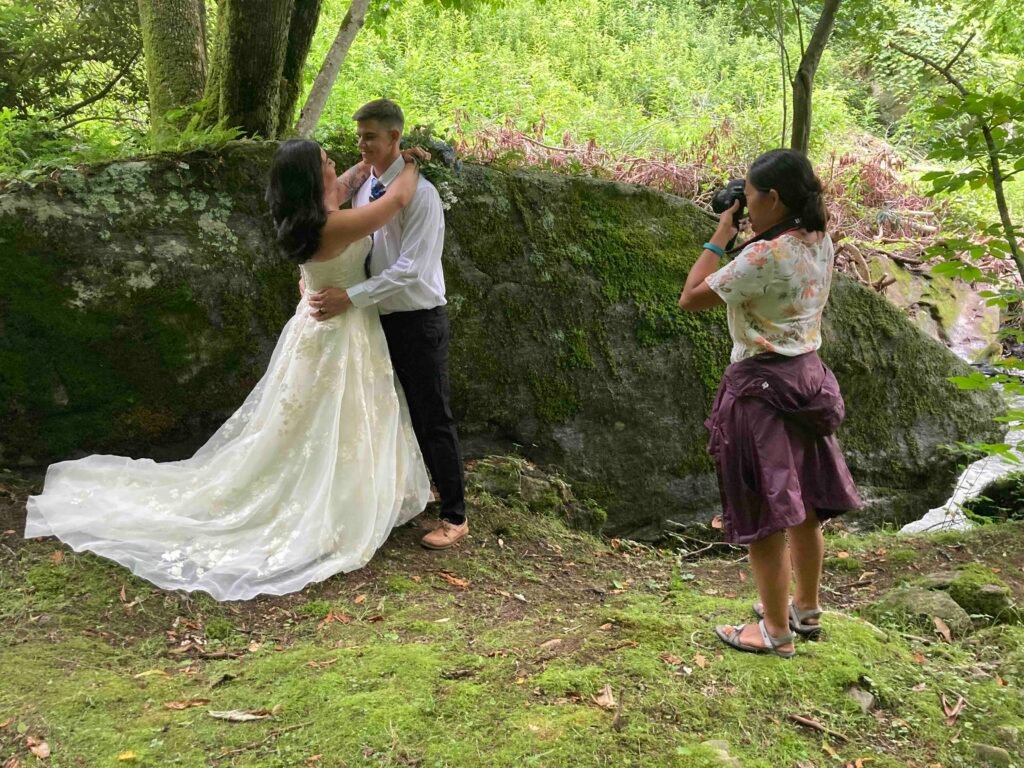
A ceremony at Windows & Weddings Over Waterfalls, Hot Springs NC
The Standard Vendor List for a Traditional Wedding
A traditional wedding typically involves most or all of the following: a venue, photographer, officiant, florist, caterer, hair and makeup artist, coordinator or planner, rental company, cake or dessert provider, and music or entertainment. That’s ten categories before you’ve made a single decision about any of them. How many vendors do you need for a wedding in a traditional format? Most couples end up coordinating between six and ten separate professionals.
Even a relatively simple wedding — smaller guest count, straightforward format — can involve five or six separate professionals whose schedules, expectations, and contracts all have to align with each other and with you. The cumulative weight of that coordination is what most couples underestimate when they start.
Smaller Weddings Still Have the Same Categories
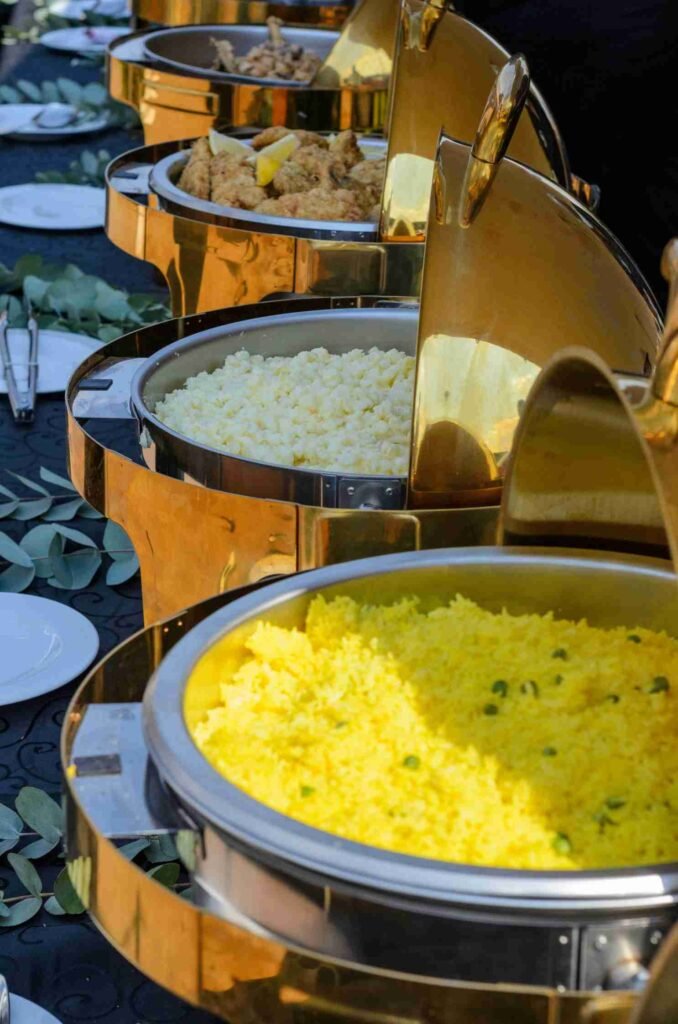
The assumption that a smaller wedding means fewer vendors is mostly wrong. A micro wedding or elopement still needs photography, an officiant, florals, coordination, and often hair, makeup, and catering. The guest count shrinks, but the vendor list often doesn’t.
What changes is scale, not structure. You’re still managing the same categories — you’re just doing it for fewer people. That’s still research, still contracts, still timeline coordination, still the work of making sure everyone shows up to the right place at the right time and knows what to do when they get there.
The Part That Doesn’t Appear on Any List
When you hire vendors independently, you become the connector. You’re the one making sure the photographer knows when the florist arrives. You’re the one sending the timeline to the caterer. You’re the one fielding questions on the morning of the wedding because the officiant and the coordinator have never worked together before and each one is checking in separately.
That coordination overhead — the emails, the follow-ups, the decision-making, the logistics management — doesn’t show up when couples ask how many vendors do you need for a wedding. But it’s real, and it accumulates steadily across the months of planning.
For a sense of how much time this typically takes, our guide to how long it takes to plan a wedding puts the coordination work in context.
What Changes When the Team Is Already Curated
When vendors already know each other, already know the venue, and have worked through the same day structure before, the dynamic changes. They don’t need you to connect them. They don’t need the timeline explained. The questions that would otherwise land in your inbox on the morning of your wedding have already been answered in previous experience.
This is one of the clearest practical arguments for all-inclusive packages in a setting where the vendor team is already established. The coordination work is already done. You step into a structure that functions without you having to build it first.
Outdoor waterfall venues work especially well in this context because the setting itself reduces the production overhead — the atmosphere is already there, which means fewer vendors are needed to manufacture it.
Do You Need Every Vendor?
Not necessarily. The answer to how many vendors do you need for a wedding depends entirely on how much of the planning you want to manage yourself. The right answer depends on what you actually want the day to feel like. Couples who want full creative control and enjoy the planning process often prefer to source vendors independently — the customization is worth the coordination to them. Couples who want a complete experience without building it from scratch often find that an all-inclusive structure removes far more than it constrains.
According to The Knot’s wedding vendor checklist, most weddings involve vendors across multiple categories — which gives a sense of where the complexity tends to accumulate. For couples comparing overall costs alongside vendor decisions, our guide to micro wedding cost in North Carolina breaks down where the budget typically goes by category.
Where Weddings Over Waterfalls Fits
At Weddings Over Waterfalls, the all-inclusive packages are built around a team that already works together on the property. The photographers know the ceremony sites. The coordinator knows the timeline. The florist knows the setting. You’re not assembling these relationships from scratch — they exist already, and they’ve produced weddings on this land before.
That doesn’t mean the day feels generic. It means the structure is in place so the experience can be personal without the planning being a burden. You can view the full package details here to see exactly what’s included and how the vendor team is structured.
Not Getting Married Here? You Can Still Experience It
Even if you choose a different venue, you can still experience the waterfalls, forest, and privacy of the property through a stay at Windows Over Waterfalls.
Plan a Romantic Getaway Instead
Airbnb designates this as a top 10% home — their designation, not ours · Guest Favorite · Superhost
What Airbnb Guests Are Saying
★ 4.97
254 Five-Star Reviews
Read the reviews there, then book direct here and skip Airbnb’s guest service fee.
As of October 2026 — and still growing.