
What Makes a Wedding Location Truly Unique?
Most couples start their venue search the same way — a few searches, a scroll through Instagram, a shortlist of places that look good in photos. That process produces fine weddings. It also produces weddings that feel interchangeable.
If you’re looking for something different, the question isn’t “where are the most unique wedding destinations?” It’s a more personal one: what kind of environment would make your ceremony feel like it couldn’t have happened anywhere else? The couples who find the best unique wedding destinations aren’t necessarily searching harder — they’re searching differently.
This guide isn’t a venue directory. It’s a framework for finding a location that actually fits — the atmosphere you want, the experience your guests will have, and the practical details that make it real.
A ceremony at Windows & Weddings Over Waterfalls, Hot Springs NC
1. Start With Atmosphere, Not Aesthetics
The instinct is to look for a place that photographs well. That’s a reasonable starting point, but it’s not the whole picture. A venue that produces beautiful images can still feel hollow on the day itself — too staged, too generic, too much like a set.
The more useful question is: what do you want the air to feel like during your ceremony? Do you want the sound of moving water? The weight of old stone? Open sky? Tree canopy overhead? The most distinctive unique wedding destinations have a sensory identity — a quality that’s particular to that place — and identifying what kind of environment you’re drawn to before you start searching will help you filter quickly.
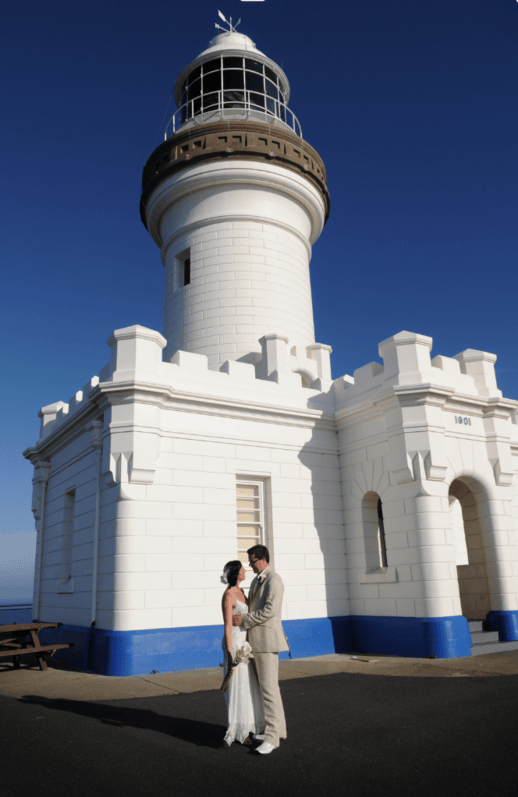
Some couples find that the answer points them toward natural settings — mountains, forests, coastlines, waterfall sites. Others want architectural character: a converted warehouse, a historic library, a lighthouse. Some want something more intimate — an art studio, a private estate, a place that feels like it belongs to them for the day.
There’s no wrong answer. But having one helps you filter quickly and avoid wasting time on venues that would look fine in photos but wouldn’t feel right in person.
It’s also worth thinking about scale. Unique venues often work best at smaller guest counts — they have character precisely because they weren’t built for weddings. A waterfall ceremony site, a greenhouse, a private mountain property — these spaces reward couples willing to keep the guest list tight. If you’re drawn to intimate settings, a micro wedding venue may give you more options than a traditional event space.
2. Where to Find Venues That Don’t Show Up Everywhere
The Knot and WeddingWire are useful starting points for finding unique wedding destinations, but they surface the same results for everyone. The more interesting venues — private properties, natural sites, unconventional spaces — often don’t advertise heavily through those platforms.
A few more productive approaches:
Search by location type, not venue type. Instead of searching “unique wedding venues near Asheville,” try searching for the setting you want — waterfall wedding sites, private mountain properties, forest ceremony locations. You’ll find venues that describe themselves by what they are, not just what they host.
Follow photographers in the region. Wedding photographers who work in an area accumulate knowledge of venues that most couples never find through conventional searches. Their Instagram feeds and blog galleries are often a better index of what’s actually available than any directory.
Check state and regional tourism sites. Many regions promote event-capable natural and historic sites that would never show up in a wedding directory. State parks, heritage properties, and conservation lands sometimes have permit processes for small ceremonies.
Look at Airbnb properties with event capacity. Private estates and mountain properties sometimes host small weddings — particularly elopements and micro weddings. Our guide to Airbnb weddings versus private venues walks through how those options compare.
Ask a local planner. A planner based in the region you’re considering will know about off-market options, private properties, and sites that have never been listed anywhere. One conversation can surface options that months of online searching wouldn’t.
3. How to Evaluate a Venue Before You Commit
Once you have a shortlist of unique wedding destinations, the evaluation process matters as much as the search. A few things to work through before you sign anything:
Does the venue’s character match what you’re building? This isn’t just about visual aesthetics — it’s about whether the space supports the kind of experience you want. A venue with dramatic natural features and minimal infrastructure puts the environment at the center. A venue with full event services and a built-out layout gives you more control. Neither is better; they’re different commitments.
What’s included, and what isn’t? Unique venues vary enormously here. Some provide everything — ceremony space, lodging, coordination, catering. Others provide only the site and leave all logistics to you. Know which you’re looking at before you compare prices. A bare site that seems affordable may require significant vendor spend to make work. An all-inclusive package that seems expensive may cover most of what you’d be sourcing separately anyway. Our breakdown of hidden wedding costs is useful context here.
Is there a contingency plan for weather? This matters more at unconventional venues than traditional ones. Ask directly: what happens if it rains? What does the backup look like? If there isn’t one, that’s a real logistical risk — especially at outdoor natural sites.
What are the access and travel realities for your guests? Remote venues create atmosphere. They also create logistics. If guests need to navigate unmarked roads, climb terrain, or find parking in an unfamiliar area, that’s worth planning around — not avoiding, necessarily, but accounting for in how you communicate with people before the day.
Our list of questions to ask your wedding venue goes deeper on this — worth reviewing before any site visit or call.
4. Thinking About the Guest Experience
The most immersive unique wedding destinations can create the most memorable experiences for guests — and they can also create the most friction if the logistics aren’t handled well. A few things worth planning deliberately:
Arrival and orientation. Guests arriving at an unfamiliar or remote location need clear, specific instructions — not just a GPS pin. Write directions that account for what GPS misses. If the venue has a parking situation, explain it in advance.
Accommodations. If your venue is more than a short drive from where most guests will stay, make lodging recommendations part of your communication. The more remote or unusual the location, the more helpful it is to have a short list of options at different price points ready to share.
What guests do between events. For destination weddings and elopements with guests, the area around the venue matters. What is there to do? What restaurants or experiences would you recommend? Sharing a short list of local suggestions makes guests feel like you thought about their experience, not just the ceremony itself.
Scale deliberately. One of the real advantages of unique venues is that they often work best small. A waterfall site, a private mountain property, a converted space with strong architectural character — these environments are more powerful at 10 or 20 guests than at 80. If you’re drawn to intimate venues, lean into that rather than trying to scale the guest list to what you think is expected.
5. Making the Space Feel Like Yours
The unique wedding destinations that stay with people tend to have something in common: the couple didn’t just rent the space, they made choices that connected the environment to who they are. That’s not about decoration — it’s about intention.
If you’re marrying at a waterfall, let the water be the sound design. You don’t need music playing through speakers if the falls are providing atmosphere. If you’re in a forest, the light and quiet are doing something — design the ceremony around them rather than over them.
The same principle applies to food, music, and timing. Local ingredients, a playlist that actually reflects what you listen to, a ceremony that starts when the light is right rather than when the schedule says — these things accumulate into an experience that feels considered rather than assembled.
Vendors matter here too. A photographer who has worked in your environment before will know where the light lands and how to work within the space. A coordinator familiar with the venue will anticipate logistics you’d never think to ask about. Experienced vendors don’t just execute — they contribute.
For couples who want most of this handled, an all-inclusive wedding package is worth understanding — it bundles photography, florals, officiant, and coordination into a single experience so the planning load is minimal.
One Venue Worth Knowing About
For couples who’ve worked through this process and landed on natural settings, Weddings Over Waterfalls is one of the more deliberate unique wedding destinations in the Southeast — a private property near Hot Springs, NC, about an hour from Asheville, designed specifically for intimate weddings, micro weddings, and elopements, with multiple waterfall ceremony sites, forest paths, creekside spaces, and on-site lodging.
It’s not a converted event hall. The waterfalls aren’t a backdrop — they’re the environment the ceremony happens inside of. You can learn more about what’s available, including pricing, on the elopement venue page or review the full pricing breakdown.
For couples still deciding between an elopement and a small wedding, the comparison between a micro wedding and elopement is a useful read.
Not Getting Married Here? You Can Still Experience It
Even if you choose a different venue, you can still experience the waterfalls, forest, and privacy of the property through a stay at Windows Over Waterfalls.
Plan a Romantic Getaway Instead
Airbnb designates this as a top 10% home — their designation, not ours · Guest Favorite · Superhost
What Airbnb Guests Are Saying
★ 4.97
254 Five-Star Reviews
Read the reviews there, then book direct here and skip Airbnb’s guest service fee.
As of October 2026 — and still growing.