
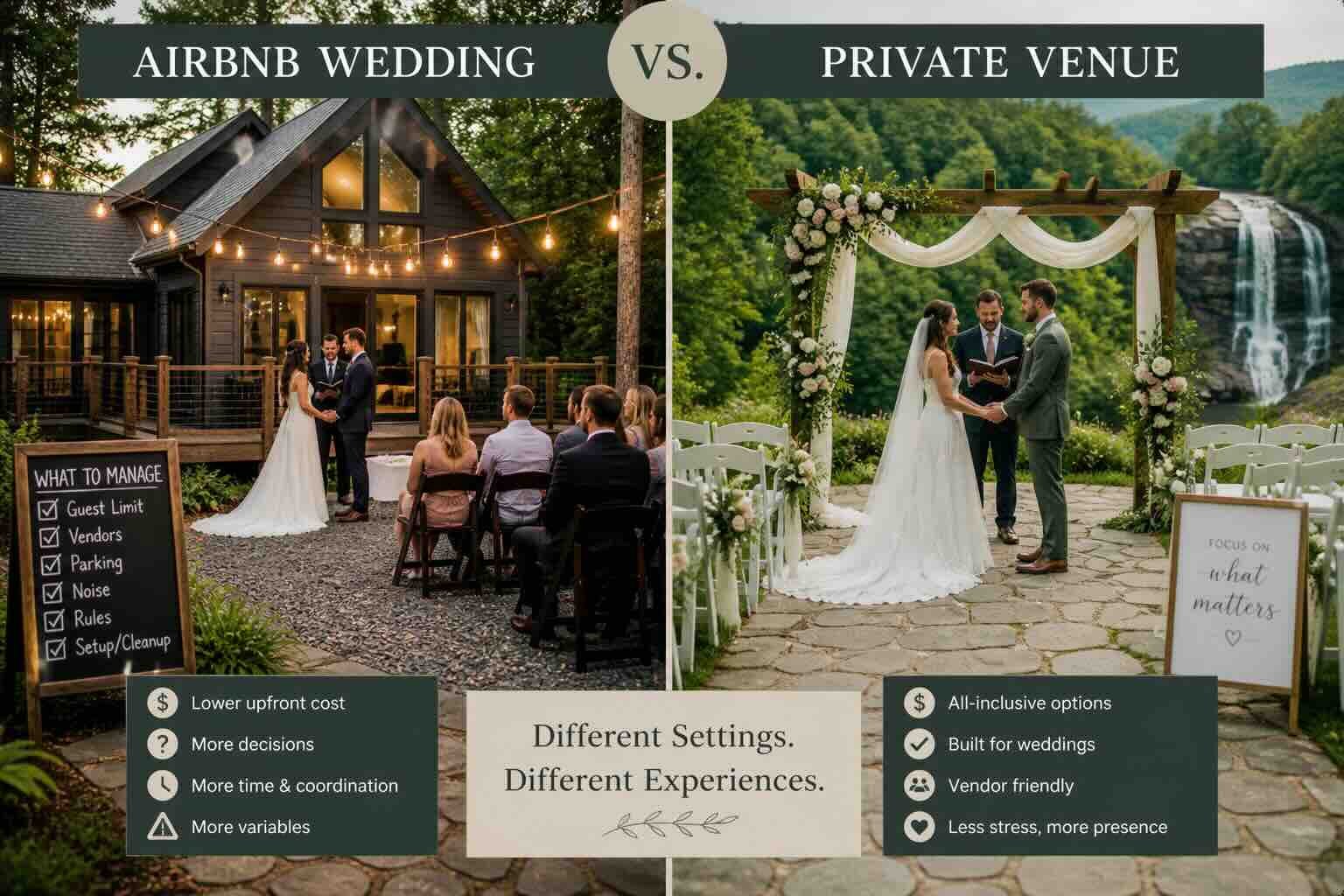
The comparison between an Airbnb wedding vs a private venue comes up early for most couples planning a small ceremony in the mountains. An Airbnb can look like the simpler and more affordable path — a beautiful property, a fraction of the venue cost, and a setting that photographs well. In the right circumstances, that instinct is sound. For very small elopements with full host approval, an Airbnb can work.
The differences between the two become clearer once the wedding starts taking shape — not in the photos, but in how the day actually functions once people arrive.
What You’re Actually Booking
An Airbnb is designed around overnight lodging. A private venue is designed around the flow of a wedding day. That distinction may not seem significant until you start building the event around the space.
A vacation rental is structured to comfortably house a certain number of guests for a few nights. It wasn’t designed with vendor access, ceremony locations, guest parking, weather contingencies, or the movement of a wedding day in mind. A private venue was. The infrastructure — where guests arrive, where the ceremony happens, how vendors move through the property, where people gather afterward — is already built into the space rather than something you have to figure out around it.
In mountain settings specifically, this gap becomes more visible. Many rentals sit on steep roads, limited parking, or shared driveways in quieter residential areas where gatherings stand out quickly. What works for four overnight guests may not work for a ceremony with vendors, cars, and a structured timeline.
When couples compare an Airbnb wedding vs a private venue, this is usually where the real distinction reveals itself — not in the listing photos, but in the logistics of the day itself.
Permission vs Reliability
At an Airbnb, you need to ask a host for permission to hold a wedding at a property that was never designed for one. At a private venue, the expectation of a wedding is already built in. That difference shapes the entire experience.
Hosts who aren’t aware of a ceremony — or who are uncomfortable with one — tend to notice the moment activity picks up. Multiple cars arriving, vendors unloading equipment, guests moving through the property, music starting. Exterior security cameras are standard on most remote mountain rentals, and hosts who see activity that looks different from a normal overnight stay often respond quickly. The range runs from a call to Airbnb support to showing up at the property to involving local authorities if they believe occupancy rules are being violated.
Even when nothing escalates, the possibility that the day could be interrupted carries its own weight. Most couples want their wedding to feel settled — not like something they’re hoping quietly works out.
A private venue removes that variable. Weddings are the entire purpose of the property. Vendor access, photography, ceremony setup, and guest arrival are all expected. There’s no negotiation about what’s permitted because permission was never in question.
Cost: What You See vs What You Build
The Airbnb rental fee is the starting point, not the full number. Most properties require a two-night minimum, and cleaning fees, service fees, and occupancy taxes add on top. Beyond the rental itself, you’re still building a wedding around a space that wasn’t designed for one — setup, rentals, vendor logistics, and cleanup are all variables that dedicated venues typically have structured answers for already.
A private venue may cost more upfront, but the comparison shifts once you account for what’s included versus what has to be sourced, coordinated, and managed separately. A closer look at Airbnb wedding cost covers where the numbers tend to converge.
Stress and Decision-Making
With an Airbnb, planning involves confirming what’s allowed, coordinating vendors around property limitations, managing parking logistics, accounting for weather without a backup infrastructure, and navigating the host relationship. None of those things is impossible on its own. Together, they add coordination overhead that compounds as the guest count or complexity increases.
With a private venue, those decisions are already simplified because the property was built around them. The structure is in place. The answers exist before the questions arise. For couples planning from a distance — common for destination weddings in the NC mountains — that difference is amplified. Major decisions made remotely without being able to problem-solve in person carry more risk at a property that wasn’t designed for the event.
Guest Experience
Guests feel the difference too. Limited parking, unclear property flow, or spaces that weren’t arranged for a gathering affect how relaxed everyone feels from the moment they arrive. A venue designed around weddings has already solved those problems — arrival, ceremony, gathering space, and movement through the property are all considered in how the space was built.
When an Airbnb Wedding vs a Private Venue Actually Compares Favorably
For a very small elopement — two to four people, minimal vendor involvement, no reception, and explicit written approval from the host — an Airbnb can deliver a private, natural setting at a lower cost than a dedicated venue. The couples who make this work successfully are the ones who disclosed everything upfront and got clear answers before booking. That scenario is real and worth acknowledging.
Once guest count, vendors, parking, logistics, and a structured timeline enter the picture, the comparison shifts. The variables that an Airbnb introduces — host approval, property limitations, liability questions, uncertainty on the day — become harder to manage as the wedding grows.
What Many Couples Are Actually Looking For
Most couples drawn to the Airbnb wedding vs a private venue comparison aren’t really looking for a rental. They’re looking for privacy, natural surroundings, and an intimate atmosphere — and an Airbnb seems like the most affordable path to that experience.
A dedicated private waterfall wedding venue delivers that same immersive natural setting without the variables. Multiple ceremony locations, forest paths, creekside spaces, on-site lodging, and the sound of working waterfalls throughout — all of it built around intimate weddings rather than overnight stays. The transition from ceremony to minimoon happens on the same property, without relocating. All-inclusive options are available for couples who want the full experience without managing vendors separately.
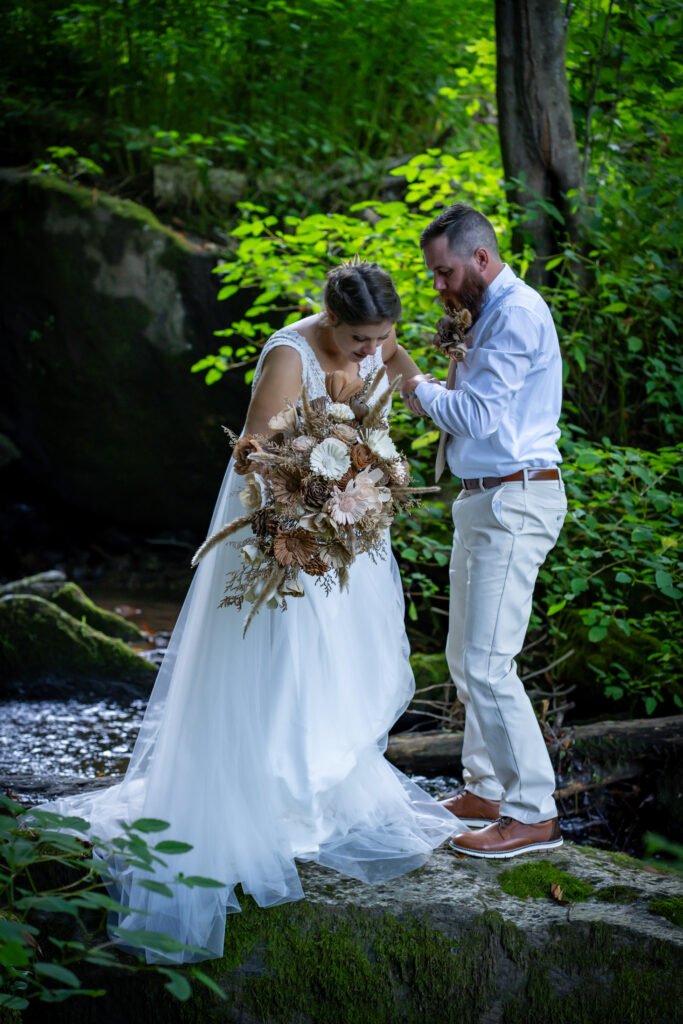
A ceremony at Windows & Weddings Over Waterfalls, Hot Springs NC
Final Thoughts
The decision between an Airbnb wedding vs a private venue isn’t only about cost or aesthetics. It’s about how much of the day you want to spend managing variables versus experiencing the wedding itself. For a very small, simple elopement with the right host, an Airbnb can work. For anything more complete, a venue designed for the purpose almost always produces a cleaner, calmer experience.
The best choice is the one that lets you be present on the day rather than managing it.
Looking for a Private Venue Designed Around This Experience?
Weddings Over Waterfalls is a private waterfall venue near Hot Springs, North Carolina — built for intimate elopements, micro weddings, and small ceremonies in a natural mountain setting. Venue-only and all-inclusive options available.
Not Getting Married Here? You Can Still Experience It
Even if you choose a different venue, you can still experience the waterfalls, forest, and privacy of the property through a stay at Windows Over Waterfalls.
Plan a Romantic Getaway Instead
Airbnb designates this as a top 10% home — their designation, not ours · Guest Favorite · Superhost
What Airbnb Guests Are Saying
★ 4.97
254 Five-Star Reviews
Read the reviews there, then book direct here and skip Airbnb’s guest service fee.
As of October 2026 — and still growing.