


Airbnb wedding rules are not always clearly posted, and that gap is where most couples run into trouble. A property can look ideal — private, wooded, scenic, exactly the kind of setting a small ceremony deserves — without being approved for any kind of event. Understanding what the platform allows, what individual hosts control, and where the gray areas create real risk is worth doing before a reservation is made.
Does Airbnb Allow Weddings?
Airbnb doesn’t operate like a wedding venue. In most cases, events are either banned, restricted, or left to the host’s discretion depending on the property. Airbnb’s platform policy prohibits disruptive gatherings and parties — and while that doesn’t automatically rule out a small elopement, anything involving guests, vendors, music, or a structured ceremony can fall into restricted or prohibited territory.
View Airbnb’s official community disturbance policy
The key point: a listing that looks perfect is not the same as a listing that’s approved for a wedding.
Host Rules Take Priority
Every Airbnb property is ultimately governed by the host, not the platform. Even where Airbnb’s policies leave room for interpretation, the host’s house rules take precedence. Some hosts allow very small gatherings with prior approval. Others prohibit any form of event — no additional guests beyond the reservation, no vendors on-site, no amplified music, no ceremonies.
If a wedding isn’t clearly approved in writing before the reservation is made, the host has the right to cancel the stay or intervene if they believe the rules are being violated. That’s a significant risk to take on a day with no backup plan.
Why a Small Wedding Still Triggers Concerns
Most couples assume that keeping the guest count low puts them outside the scope of Airbnb wedding rules. In practice, even a small ceremony introduces activity a rental property wasn’t designed for. Multiple cars arriving in a short window, vendors carrying equipment onto the property, guests gathering outdoors, decorations being set up, noise during the ceremony — from a host’s perspective, that’s an event regardless of how the couple defines it.
The distinction between a normal stay and an event isn’t determined by the label couples use. It’s determined by what’s actually happening on the property.
Liability and Damage
Liability is another dimension most couples don’t consider until something goes wrong. Even carefully planned ceremonies with respectful guests can result in accidental damage that a short-term rental isn’t equipped to absorb quickly. A broken railing, damaged flooring, hot tub failure, landscaping damage, or issues caused during vendor setup can become expensive — particularly in remote mountain areas where repairs take longer and custom features cost more to replace.
From the host’s perspective, a single event that causes damage can force cancellations on future bookings while repairs are completed. That ripple effect — lost income, repair coordination, liability complications — is part of why Airbnb wedding rules treat gatherings differently from standard stays, even when the guest count is small.
What Happens Without Permission
If a host discovers a wedding is taking place without approval, the range of responses runs from uncomfortable to actively disruptive. The reservation can be canceled before arrival. The host may contact Airbnb support, show up at the property, or involve local authorities if they believe occupancy rules are being violated. Additional fees or penalties may be applied after the fact.
Even when nothing escalates, the uncertainty — the background awareness that the ceremony could be interrupted at any point — changes the emotional experience of the day in ways that are difficult to recover from.
How Hosts Find Out
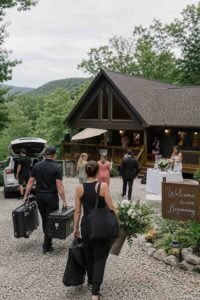
Most couples assume a small ceremony will go unnoticed. Most properties have more monitoring than couples expect. Exterior security cameras, driveway sensors, noise monitoring devices, smart locks, and nearby neighbors all create visibility into what’s actually happening on the property.
Multiple cars arriving, vendors unloading equipment, guests dressed for a ceremony, tables and decorations being carried in — any of these can make it immediately clear that something beyond a normal overnight stay is taking place. Hosts using these systems aren’t trying to invade privacy inside the home. They’re protecting the property, enforcing occupancy limits, and managing the liability that comes with it.
When a host sees activity that looks like an unauthorized event, the response is usually immediate. They don’t know yet whether this is a small ceremony or the beginning of something larger, and that uncertainty tends to produce a reaction rather than a measured wait-and-see.
When Airbnb Weddings Can Work
There are circumstances where an Airbnb wedding works — they’re just more limited than most couples expect. A very small elopement with two to four people, no reception, minimal or no vendor involvement, and explicit written permission from the host before booking is a fundamentally different situation from a 20-person micro wedding at a property that was never designed for it. The couples who navigate this successfully are almost always the ones who disclosed everything upfront.
A Simpler Alternative
Most couples drawn to Airbnb weddings aren’t actually looking for a rental. They’re looking for privacy, natural surroundings, and an intimate atmosphere — and an Airbnb seems like the most affordable path to that. The difference is that a dedicated venue is designed for exactly that experience without the variables that make rentals complicated. No uncertainty about what’s permitted. No host whose comfort level with the event is unknown. No need to work around rules that were never built for ceremonies.
For couples weighing the options, our guide on destination wedding vs local wedding covers how setting and scale affect the overall experience. And for couples specifically drawn to waterfall settings, private waterfall wedding venues are intentionally designed to provide that immersive natural atmosphere without the uncertainty surrounding vacation rentals.
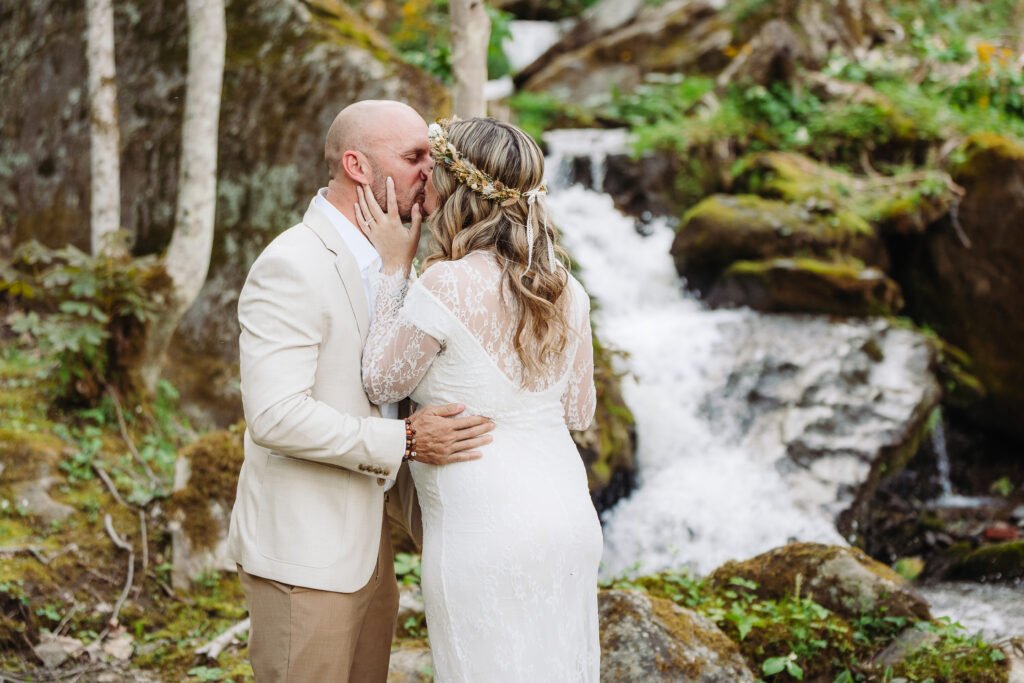
A ceremony at Windows & Weddings Over Waterfalls, Hot Springs NC
Final Thoughts on Airbnb Wedding Rules
Airbnb wedding rules aren’t designed to prevent every ceremony. They exist because most rental properties were never built to host events — and the gap between what a property looks like in photos and what it’s actually equipped to handle is where most problems originate.
For a very small elopement with full host approval, an Airbnb can work. For anything more structured, the more useful question is whether the space actually supports what you’re trying to create — or whether you’re trying to fit a wedding into a place that was never meant for one.
Looking for a Venue Where the Rules Are Already on Your Side?
Weddings Over Waterfalls is a private waterfall venue near Hot Springs, North Carolina — designed for elopements, micro weddings, and intimate outdoor ceremonies. Vendor access, photography, and on-site lodging are all part of the property.
Not Getting Married Here? You Can Still Experience It
Even if you choose a different venue, you can still experience the waterfalls, forest, and privacy of the property through a stay at Windows Over Waterfalls.
Plan a Romantic Getaway Instead
Airbnb designates this as a top 10% home — their designation, not ours · Guest Favorite · Superhost
What Airbnb Guests Are Saying
★ 4.97
254 Five-Star Reviews
Read the reviews there, then book direct here and skip Airbnb’s guest service fee.
As of October 2026 — and still growing.