

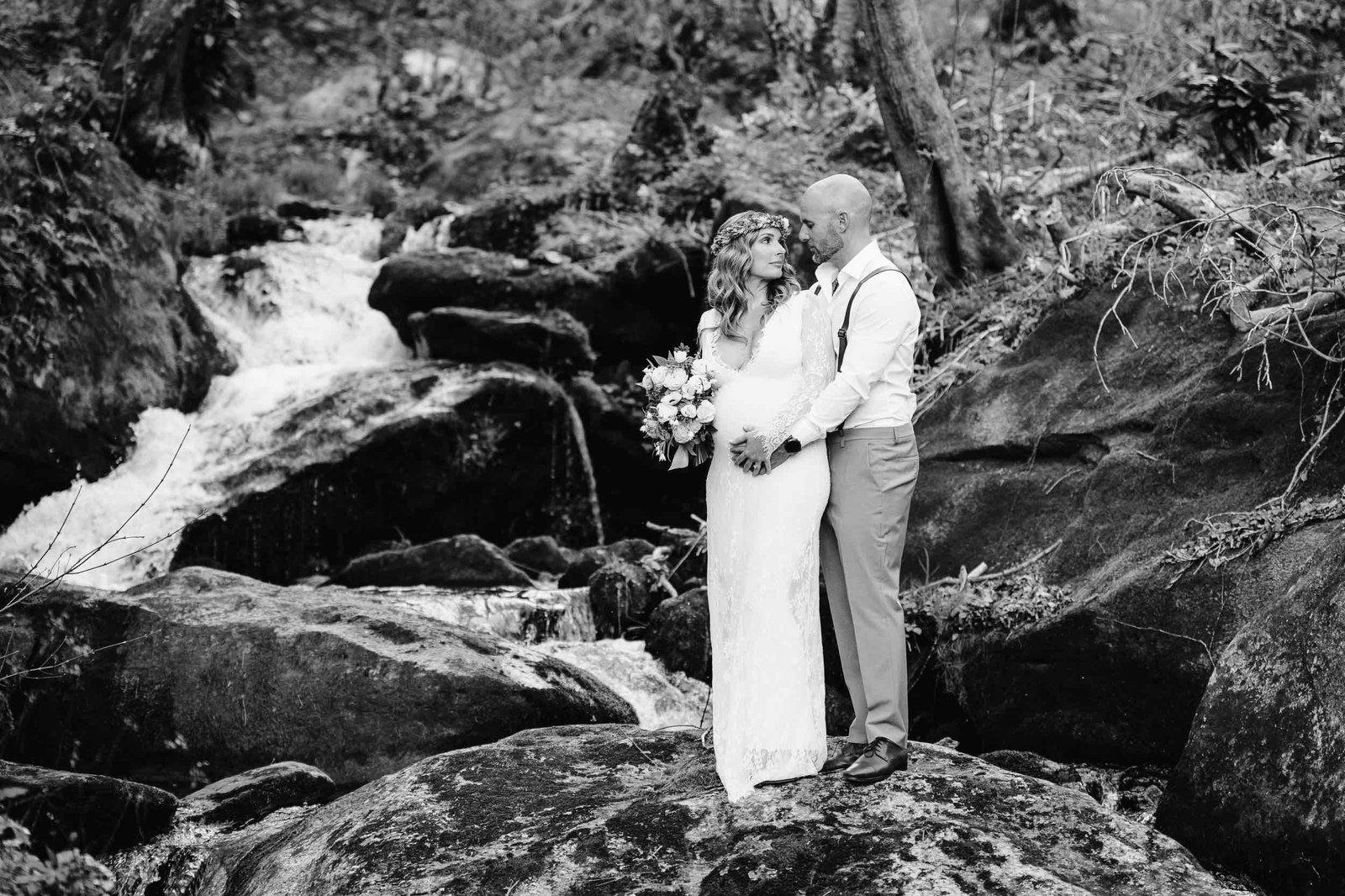
The question couples ask isn’t really “should we elope or have a wedding?” It’s closer to: what kind of day do we actually want? The eloping vs wedding comparison tends to get framed around what you’re giving up — but that framing misses the point. Eloping and traditional weddings aren’t better or worse versions of the same thing. They’re different experiences built around different priorities.
This guide breaks down the real differences — cost, atmosphere, logistics, guest experience, planning timeline — and clears up the misconceptions that still cloud the conversation.
What the Eloping vs Wedding Comparison Actually Comes Down To

A traditional wedding is built around an event — a gathering designed to be witnessed, celebrated, and remembered by a room full of people. The production is part of the point. Venue, catering, florals, music, timeline, seating — every element is engineered to support a shared experience for guests.
An elopement is built around a moment. The ceremony isn’t something you perform for an audience. It’s something you inhabit — in a place you’ve chosen, with the people (or just the two of you) you’ve chosen, at a pace that lets you actually be present.
Neither is wrong. But they require genuinely different things from you — different budgets, different planning approaches, different emotional preparation. Understanding that distinction makes the decision clearer.
Eloping vs Wedding: Side-by-Side
Before getting into the details, here’s how the two formats compare across the most common decision factors:
| Factor | Elopement | Traditional Wedding |
|---|---|---|
| Average cost | $4,000–$10,000 | $25,000–$35,000+ |
| Guest count | 0–20 (typically) | 50–200+ |
| Planning time | 2–6 months | 12–18 months |
| Vendors to coordinate | 1–3 (or 0 with all-inclusive) | 8–15 |
| Day-of focus | Each other | The event |
| Setting flexibility | High — waterfall, forest, mountain | Limited by venue capacity |
| Stress level | Lower | Higher |
The Real Cost Difference
Cost is usually the first thing couples compare in the eloping vs wedding conversation — and the gap is significant.
The average traditional wedding in the US runs between $25,000 and $35,000. That figure includes venue, catering, photography, florals, attire, music, and the long list of vendors required to execute a large-scale event. Many couples spend more — and many don’t fully account for gratuities, transportation, hair and makeup trials, and the dozens of smaller line items that accumulate quietly.
An elopement at a dedicated venue — one that includes lodging, ceremony space, and an all-inclusive package — typically runs $4,000 to $10,000 for a complete experience. At Weddings Over Waterfalls, venue-only elopements start at $250. All-inclusive elopement packages — photography, officiant, florals, coordination, cake, and hair and makeup — start at $1,775.
The difference isn’t just money. It’s also the mental overhead of coordinating 8–12 vendors versus arriving at a place where everything is already in place.
If you want a full breakdown of what drives elopement pricing, the guide to elopement and micro wedding packages covers it in detail. And if hidden costs concern you, our guide to hidden wedding costs covers what most couples don’t see coming.
Want to Skip the $30,000 Price Tag?
Our all-inclusive elopement packages start at $1,775 — photography, officiant, florals, coordination, and a private waterfall venue all included. Lodging isn’t included in the package, but a 2-night stay is required. By law, overnight stays on the property must be booked through the rental, so the cabin is reserved separately through Windows Over Waterfalls.
The Planning Timeline Difference
Traditional weddings typically require 12–18 months of planning. The timeline is driven by venue availability, vendor booking windows, invitation lead times, and the coordination required to align a large number of moving parts. For many couples, the engagement period becomes dominated by wedding logistics rather than the relationship itself.
Elopements compress that timeline significantly. Most couples plan an elopement in 2–6 months. With an all-inclusive package, the planning load is further reduced — instead of sourcing and contracting 8–12 separate vendors, you’re making one booking decision and letting the venue handle the coordination.
The time you save isn’t just logistical. It’s emotional. Couples who elope often describe the engagement period as lighter — more focused on each other than on event management.
The Guest Experience Question
The eloping vs wedding decision looks different depending on whose experience you’re weighing.
For the couple, an elopement tends to produce a day that’s more present, more intimate, and more emotionally connected to the ceremony itself. Without the performance pressure of a large gathering, couples often describe eloping as the day they’ve felt most themselves.
For guests, a traditional wedding offers something an elopement doesn’t — participation in a shared moment, a gathering of people who matter to both families, and a celebration that extends beyond the couple. That experience has genuine value, and for some couples, it’s central to what the day means.
The honest eloping vs wedding comparison acknowledges both. If the gathered celebration is genuinely important — if the community aspect is part of what makes the marriage meaningful — a traditional wedding delivers something an elopement can’t. If the ceremony itself is the point, and the production around it feels like noise, an elopement delivers something a traditional wedding rarely can.
Misconception 1: Eloping Is Impulsive
The oldest misconception in the eloping vs wedding debate is that eloping means running off without thinking it through. In practice, couples who elope tend to be among the most deliberate planners — they’ve just chosen to direct that energy toward the experience rather than the production.
Elopements at destination venues require booking months in advance, coordinating travel, selecting packages, and making intentional decisions about what the day should feel like. The planning is quieter, but it’s no less considered.
What couples skip isn’t the thought — it’s the noise.
Misconception 2: Eloping Means No Family or Friends
Some couples elope privately — just the two of them, an officiant, and a setting that means something. Others elope with 10, 15, or 20 people who matter most. Both are elopements. The defining feature isn’t the guest count — it’s the intentionality behind it.
In the eloping vs wedding conversation, this is worth clarifying early: eloping doesn’t require excluding anyone. It requires deciding who belongs in the room, rather than defaulting to whoever expects an invitation.
Couples who want the intimacy of an elopement but also want family present often find that a micro wedding bridges both — a small, curated gathering of up to 30 guests in a setting that still feels like theirs.
A ceremony at Windows & Weddings Over Waterfalls, Hot Springs NC
Misconception 3: Elopements Aren’t as Beautiful
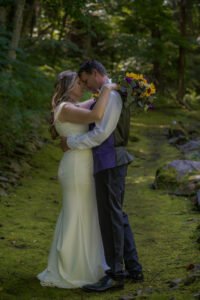
This one dissolves the moment you look at what elopements at dedicated venues actually produce. Professional photography in a private waterfall setting. Florals designed for two people rather than a ballroom. A ceremony in a forest clearing where the light, sound, and atmosphere do the work that production design tries to manufacture at scale.
The eloping vs wedding comparison on aesthetics isn’t really close — it’s just different. A traditional wedding can be visually spectacular. So can an elopement. The difference is that an elopement’s setting often has inherent atmosphere that no decoration budget can replicate. A private waterfall in the Blue Ridge Mountains doesn’t need staging.
What couples gain in an elopement isn’t just beauty — it’s presence. Without the logistics of managing a large event, you’re actually in the moment rather than moving through a schedule.
Misconception 4: Eloping Is About Avoiding Something
The older framing of elopement — running away, escaping obligation — doesn’t describe how couples approach it today. Modern elopements aren’t about avoidance. They’re about alignment.
Couples who elope have typically made a clear-eyed decision: they want a day that reflects what marriage actually means to them, not what a wedding industry or social expectation says it should look like. That’s not avoidance — it’s clarity.
The eloping vs wedding question, framed honestly, isn’t “are you brave enough to elope?” It’s “what do you actually want the day to feel like, and which format delivers that?”
Where Each Option Makes Sense
A traditional wedding makes sense when the shared celebration is genuinely important — when the gathering itself is part of what the day means, and when the scale of the event reflects the couple’s values rather than external pressure.
An elopement makes sense when the couple wants the ceremony to be the center of gravity — when location, atmosphere, and presence matter more than production, and when the intimacy of a smaller experience is the point rather than a compromise.
Many couples find that the eloping vs wedding comparison resolves itself once they stop asking “what’s expected” and start asking “what do we actually want.”
Eloping vs Wedding at a Waterfall Venue in North Carolina
If the elopement side of the comparison resonates, Weddings Over Waterfalls in Hot Springs, NC offers both venue-only and all-inclusive elopement packages on a private property with multiple waterfall ceremony sites, forest paths, and on-site lodging.
The venue is about an hour from Asheville, accessible from three regional airports, and designed specifically for intimate ceremonies — not adapted from a large-scale model. Venue-only elopements start at $250. All-inclusive packages start at $1,775.
For couples still weighing options, the guide to micro wedding costs in North Carolina and the all-inclusive packages page are worth reviewing before making a decision.
Check availability or view full pricing and package details.
Not Getting Married Here? You Can Still Experience It
Even if you choose a different venue, you can still experience the waterfalls, forest, and privacy of the property through a stay at Windows Over Waterfalls.
Plan a Romantic Getaway Instead
Airbnb designates this as a top 10% home — their designation, not ours · Guest Favorite · Superhost
What Airbnb Guests Are Saying
★ 4.97
254 Five-Star Reviews
Read the reviews there, then book direct here and skip Airbnb’s guest service fee.
As of October 2026 — and still growing.