

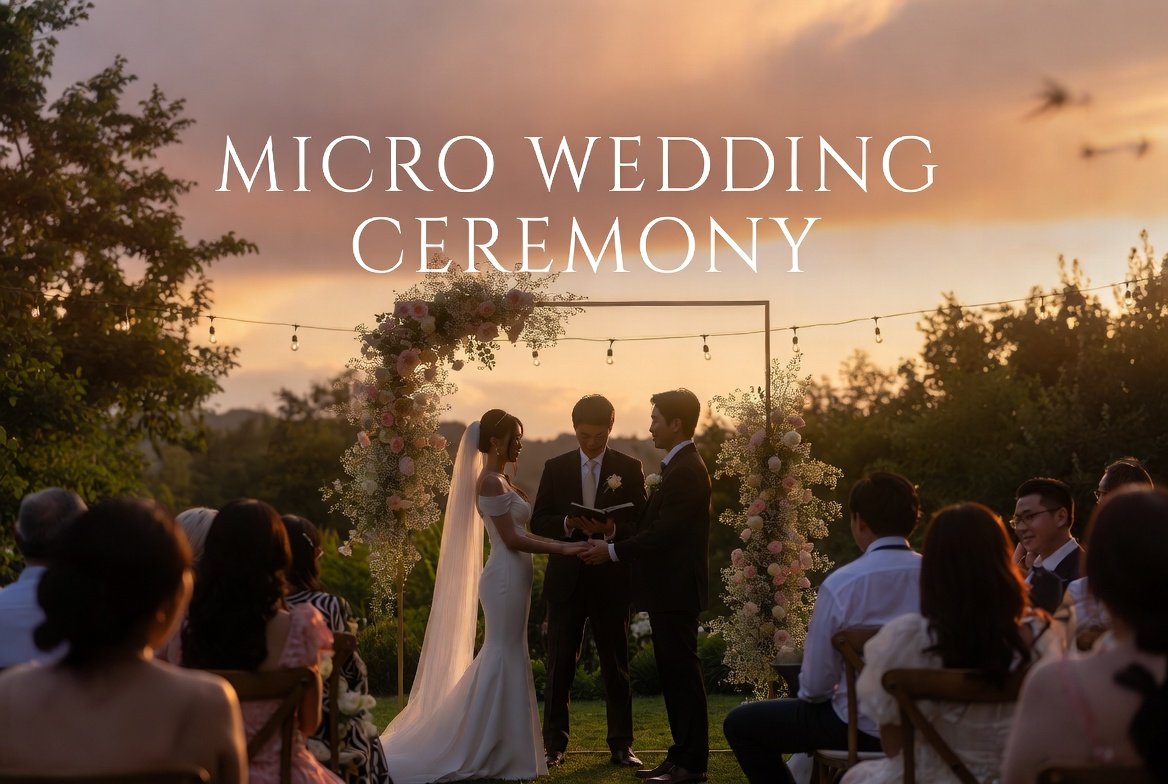
A micro wedding ceremony is where the intimacy of a small wedding becomes most apparent — and most powerful.
With 10 to 30 guests, the ceremony stops being a performance and becomes something closer to a genuine moment. There’s no crowd to project across, no need to hold the emotional register for 150 people who may or may not be paying attention. The people in attendance are exactly the people who should be there, and the ceremony can be written and paced accordingly.
Here’s what a micro wedding ceremony can look like, what elements work best at small scale, and how to make the ceremony feel like the center of the day rather than a prelude to the reception.
What Makes a Micro Wedding Ceremony Different
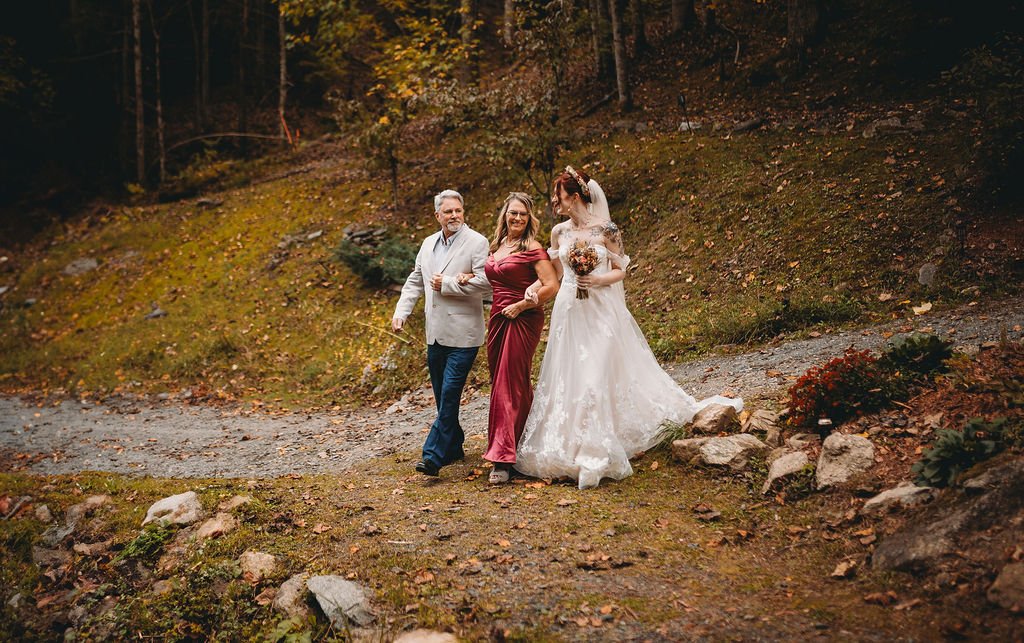
Traditional wedding ceremonies are designed to work at scale. The processional, the formal structure, the officiant projecting to the back of the room — all of it is calibrated for a large audience. Strip that audience down to 20 people standing near a waterfall, and the whole format can change.
A micro wedding ceremony doesn’t need a program, a sound system, or a processional that takes four minutes to complete. It can be quieter, slower, and more personal than anything a large wedding allows. The emotional register is different because the audience is different — these are people who know the couple, who have history with them, who are genuinely invested in what’s being said.
That changes what the ceremony can do.
Choosing the Right Ceremony Location
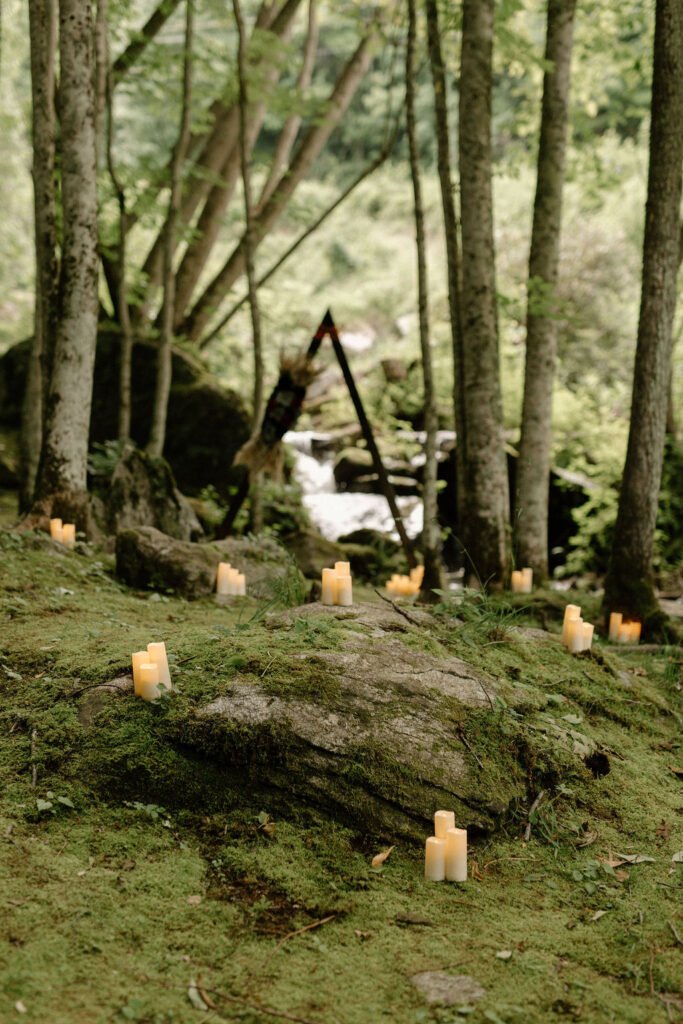 For a micro wedding ceremony, location does more work than almost any other decision. The right setting creates an atmosphere that no decoration budget can replicate — and with a small guest count, everyone in attendance is close enough to feel it fully.
What to look for in a micro wedding ceremony site:
Privacy. A private ceremony site means the moment belongs entirely to the people in it. No strangers walking through, no ambient noise from nearby events, no shared space with another wedding happening simultaneously.
Natural atmosphere. Outdoor ceremony sites — waterfall locations, forest clearings, creekside settings — create complete sensory environments before a single guest arrives. The sound, the light, the surroundings become part of the ceremony itself.
Intimacy of scale. The best micro wedding ceremony sites are sized for small groups. A clearing that holds 25 people feels entirely different from a venue that holds 300 and happens to have 25 people in it. The space should fit the guest count, not dwarf it.
Access and comfort. With guests who may range in age and mobility, confirm that the ceremony site is accessible and that guests can be comfortable for the duration of the ceremony — particularly for outdoor settings on uneven terrain.
For couples specifically drawn to waterfall settings, our guide to waterfall weddings and intimate ceremonies covers what makes these locations work so well for small ceremonies.
Micro Wedding Ceremony Structure
A micro wedding ceremony doesn’t need the full traditional structure — and often works better without it. Here’s a framework that fits small ceremonies well:
The welcome. A brief opening from the officiant that acknowledges the people present and sets the tone. At micro wedding scale, this can be personal — the officiant can reference the couple’s relationship, the setting, or the significance of the gathering without it feeling like a speech to a crowd.
The readings or rituals. Optional — but micro weddings are one of the few formats where including a reading, a shared ritual, or a moment of participation from guests feels natural rather than logistically complicated. With 20 people, a group reading or a simple ritual can include everyone present.
Personal vows. This is where a micro wedding ceremony earns its emotional power. With a small, known audience, personal vows land differently than they do in a large venue. There’s no performance pressure — just the people who know your relationship hearing words that were written for them to hear.
The ring exchange. Standard in most ceremonies, but worth discussing with your officiant whether the traditional wording fits your relationship or whether it should be personalized.
The pronouncement and first kiss. The formal close of the ceremony. At micro wedding scale, this moment has the full attention of every person present — which is something a large wedding can’t guarantee.
Time to stay. One of the most underused elements of a micro wedding ceremony is simply staying at the ceremony site after it ends. Most couples are immediately pulled into photos and the reception. Building in 10 or 15 minutes to simply be present — still at the location where it happened, with the people who were there — is worth protecting.
A ceremony at Weddings Over Waterfalls, Hot Springs NC
Choosing Your Officiant
The officiant is the most important vendor decision in a micro wedding ceremony — more so than at a large wedding, where the ceremony is one of many moving parts. At small scale, the ceremony is the center of the day, and the officiant sets its tone entirely.
A few things worth looking for:
Familiarity with the couple. An officiant who knows your story can write and deliver a ceremony that feels like it was made for you — because it was. This is rare at large weddings and entirely possible at micro wedding scale.
Familiarity with the venue. An officiant who has performed ceremonies at your venue knows the terrain, the acoustics, the timing, and how to move through the day with confidence. The difference between an officiant encountering a venue for the first time and one who knows it well shows in the ceremony.
Willingness to personalize. Ask directly whether they write custom ceremonies or work from a standard script. For a micro wedding ceremony, a generic script reads as exactly that — generic. The ceremony should reflect the couple.
Micro Wedding Ceremony Length
A micro wedding ceremony typically runs 15 to 30 minutes — shorter than most traditional ceremonies, and appropriately so. With personal vows, a reading or ritual, and a relaxed pace, 20 minutes is a complete ceremony. There’s no need to fill time for a crowd.
What matters more than length is pace. A micro wedding ceremony that moves unhurriedly through 20 minutes feels complete. The same ceremony rushed through in 10 minutes because the officiant has somewhere to be does not.
Discuss timing with your officiant in advance — and give permission for the ceremony to take as long as it needs to, rather than hitting a specific mark.
Micro Wedding Ceremony Tips for Outdoor Venues
Outdoor micro wedding ceremonies introduce a few specific considerations worth planning for:
Sound. With a small guest count in an outdoor setting, a microphone or sound system is rarely necessary. Confirm this with your officiant and venue — some waterfall settings have ambient sound that requires projection; most intimate outdoor sites don’t.
Timing and light. The best light for outdoor ceremony photography is typically late afternoon — the hour or two before sunset. If your ceremony timing is flexible, discuss it with your photographer before locking it in.
Weather contingency. Private outdoor venues should have a backup plan. Ask what the rain contingency looks like and how much notice you’ll have if conditions require a change.
Guest comfort. Seating, shade, and standing arrangements all matter more at a micro wedding ceremony where guests are close to the action. Confirm the setup in advance and make sure it fits your specific guest count and ceremony layout.
For couples still working through the differences between a micro wedding and an elopement ceremony, our guide to micro wedding vs. elopement covers the key distinctions clearly.
Micro Wedding Ceremony at Weddings Over Waterfalls
Weddings Over Waterfalls in Hot Springs, NC has multiple ceremony sites on the property — waterfall locations, creekside settings, and forest clearings — each designed for small guest counts and private ceremonies. Venue-only and all-inclusive packages are available for micro weddings and elopements, about an hour from Asheville.
Check availability or view full pricing and package details.
Not Getting Married Here? You Can Still Experience It
Even if you choose a different venue, you can still experience the waterfalls, forest, and privacy of the property through a stay at Windows Over Waterfalls.
Plan a Romantic Getaway Instead
Airbnb designates this as a top 10% home — their designation, not ours · Guest Favorite · Superhost
What Airbnb Guests Are Saying
★ 4.97
254 Five-Star Reviews
Read the reviews there, then book direct here and skip Airbnb’s guest service fee.
As of October 2026 — and still growing.