


Learning how to plan a wedding from out of state starts with simplifying decisions, not adding more of them.
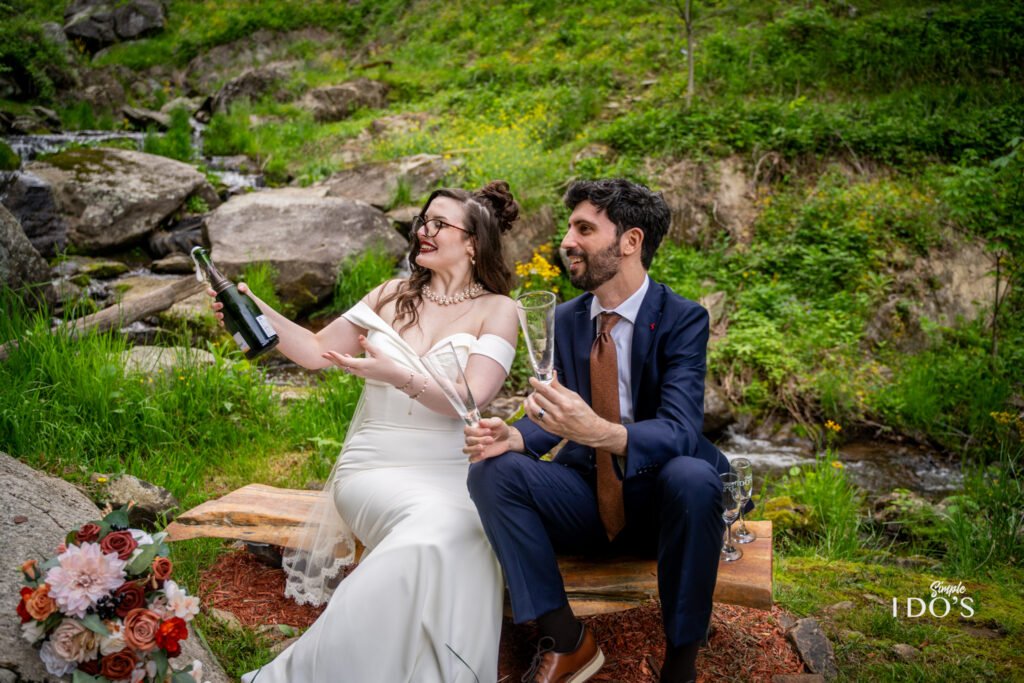
Couples have always planned weddings in places they don’t live — for the scenery, the privacy, the sense of being somewhere that feels worth traveling to. But planning a wedding from out of state can feel overwhelming when approached the same way as a traditional local wedding. The distance compounds every decision. Vendor meetings that would take an hour in person take weeks over email. Small logistics questions pile up. The whole process starts to feel like a second job.
The couples who navigate it well tend to share one approach: they simplify the structure first, then fill in the details. Here’s how to plan a wedding from out of state without turning the planning process into the hardest part of the experience.
Start With the Right Type of Venue
When you plan a wedding from out of state, the venue is the most consequential decision you’ll make. The right venue doesn’t just provide the setting — it removes most of what makes remote planning difficult. Look for venues that:
- Offer ceremony and reception spaces together on one property
- Provide setup and basic rentals as part of the package
- Have experience working with couples planning from a distance
- Offer all-inclusive or simplified packages that reduce vendor coordination
Planning from a distance also means you can’t rely on driving over to check on things. Waterfall wedding venues simplify part of this because the setting already creates most of the atmosphere — there’s less to verify, less to add, and less to coordinate around a neutral space.
If you’re still comparing options, our guide to micro wedding venues in North Carolina explains how these venues simplify the remote planning process.
Limit the Number of Vendors You Hire
Vendor coordination is usually where out-of-state wedding planning becomes complicated. Each independent vendor means a separate contract, a separate communication thread, a separate timeline to manage, and a separate relationship to maintain from hundreds of miles away.
All-inclusive packages solve most of this. When photography, officiant, florals, coordination, and catering are already bundled with the venue, the number of independent relationships you’re managing drops dramatically. The team already knows each other, already knows the property, and already has a process for the day.
You can view all-inclusive wedding packages here to see how everything can be structured into one coordinated experience.
Plan Fewer, Better Decisions
When you plan a wedding from out of state, the instinct is often to manage every detail remotely — which recreates all the complexity of a traditional wedding, just with the added friction of distance. The more useful approach is to reduce the number of decisions entirely.
Focus on the decisions that actually shape the experience:
- Location and venue
- Guest list size
- The overall experience you want to create
Everything else tends to fall into place once those are settled. This is one reason micro weddings and elopements are often easier to plan remotely — the smaller scale means fewer decisions, fewer vendors, and fewer variables to track from a distance.
Think About Guest Travel

If guests are attending, their logistics become part of what you’re managing. Keep it simple:
- Choose accommodations close to the venue
- Provide clear directions and timing well in advance
- Build a relaxed schedule with buffer time built in
Smaller guest counts make all of this significantly more manageable. When you plan a wedding from out of state with 10 to 30 guests, the coordination stays human-scale. Everyone can stay in the same area, the timeline stays flexible, and the day doesn’t require the kind of logistical infrastructure that larger weddings depend on.
Build in Time for the Experience
One of the strongest advantages when you plan a wedding from out of state is the opportunity to extend beyond a single-day event. When guests are already traveling, building in extra time transforms the wedding from a rushed ceremony into something more immersive — the setting itself becomes part of the memory rather than just the backdrop for one afternoon.
- Arrive a day early to settle in and see the property before the wedding day
- Stay after the ceremony rather than leaving immediately
- Let the experience unfold at its own pace instead of rushing through it
- Use the extra time for a minimoon without traveling anywhere new
This pacing is one of the things that makes destination-style micro weddings feel so different from traditional ones. The day doesn’t end — it continues into the evening and into the following morning.
Understand the Cost Structure
Planning a wedding from out of state doesn’t have to cost more — and when done right, it often costs significantly less. Smaller guest counts reduce catering, rentals, and vendor coordination expenses. The natural setting of a mountain or waterfall venue reduces the production budget because the environment is already doing the atmospheric work.
The savings aren’t just financial either. Fewer vendors means fewer hours spent on back-and-forth communication, scheduling, and logistics management — which has real value when you’re coordinating from a distance.
According to The Knot, traditional wedding costs continue to rise — which is a significant part of why couples are moving toward smaller, destination-style weddings. Our guide to micro wedding cost in North Carolina breaks down where the money typically goes.
Where Weddings Over Waterfalls Fits
At Weddings Over Waterfalls, a majority of couples plan their entire wedding from out of state. The property is designed to support that — a private setting with multiple built-in ceremony locations, optional all-inclusive support, and a team that’s experienced in working with couples who can’t be here in person to manage the details.
The waterfalls, the forest, and the mountain setting do a significant amount of the atmospheric work before you arrive. Which means less to coordinate, less to add, and more time to focus on the experience itself once you get here.
Planning a Wedding From Out of State
Planning a wedding from out of state doesn’t need to be complicated. In many cases it becomes easier than a local wedding when you simplify the structure — fewer vendors, a venue that already handles most of the coordination, and a setting that does the atmospheric work so you don’t have to manufacture it.
Choose a venue that supports remote planning. Reduce the number of decisions rather than adding to them. Build in time to actually experience where you are. The goal isn’t to manage more from a distance — it’s to manage less, and enjoy what you came for.
A ceremony at Windows & Weddings Over Waterfalls, Hot Springs NC
Not Getting Married Here? You Can Still Experience It
Even if you choose a different venue, you can still experience the waterfalls, forest, moss-covered trails and pathways, and the privacy of the property through a stay at Windows Over Waterfalls. It’s perfect for a romantic retreat, a quiet getaway, or anniversary and honeymoon.
Plan a Romantic Getaway Instead
Airbnb designates this as a top 10% home — their designation, not ours · Guest Favorite · Superhost
What Airbnb Guests Are Saying
★ 4.97
254 Five-Star Reviews
Read the reviews there, then book direct here and skip Airbnb’s guest service fee.
As of October 2026 — and still growing.