
The all-inclusive vs DIY wedding question is really a question about what you want the months before your wedding to feel like — and what you want to be thinking about on the day itself.
Both approaches can produce a beautiful wedding. They produce very different planning experiences. And for small weddings, micro weddings, and elopements specifically, that difference tends to matter more than people expect.
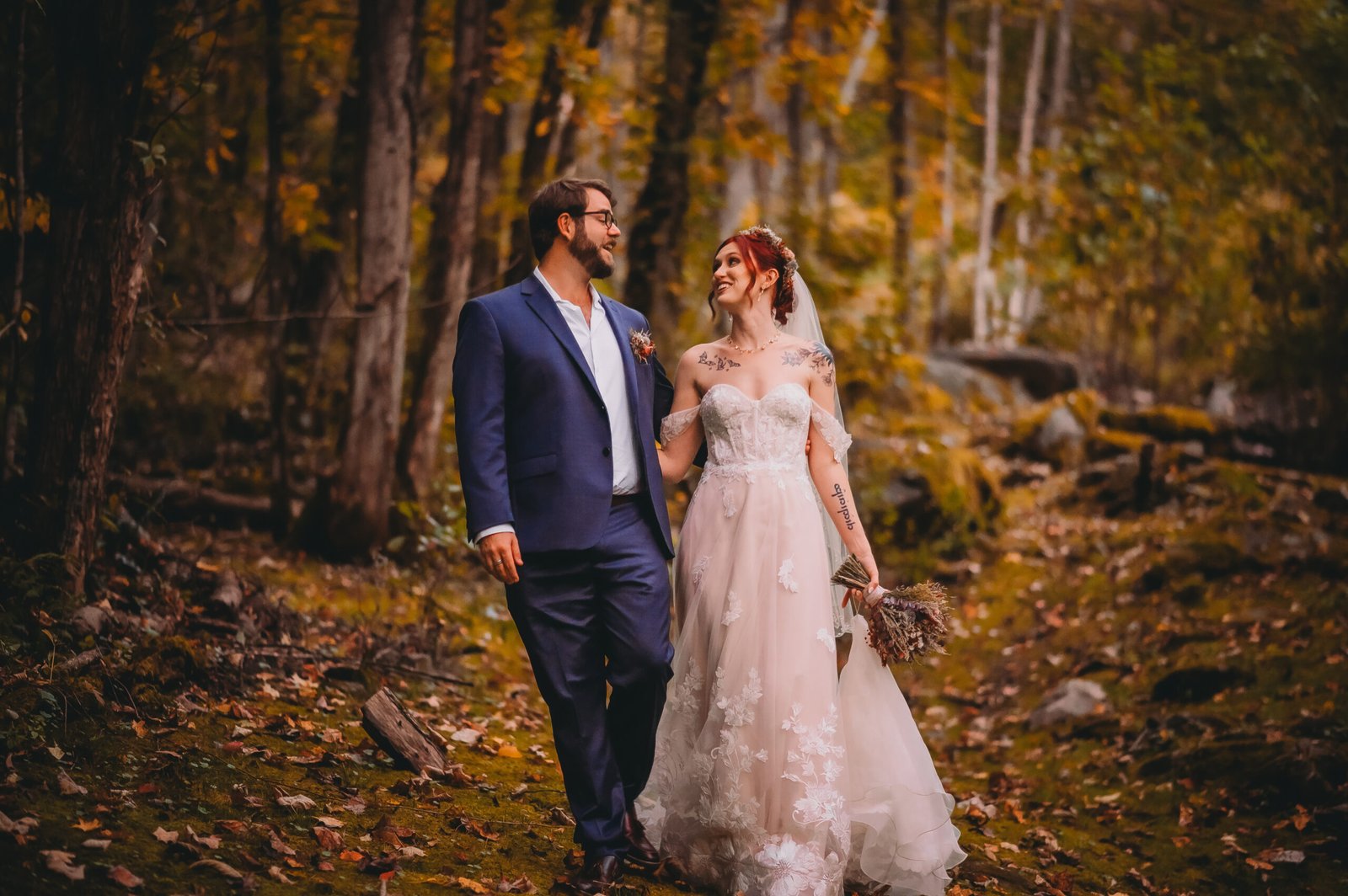
A ceremony at Windows & Weddings Over Waterfalls, Hot Springs NC
What a DIY Wedding Actually Involves
A DIY wedding means you’re responsible for assembling every piece yourself. Venue, photographer, officiant, florist, caterer, coordinator, rentals, sound system, timeline, setup, cleanup — each one a separate search, a separate contract, a separate relationship to manage. The vendors don’t know each other. They don’t know the venue. You’re the one holding it all together.
For couples who genuinely enjoy planning — who find the research satisfying, the decisions energizing — this can work well. The control is real, and the result can feel deeply personal. But it’s a significant undertaking, and most couples underestimate how much of it happens in the background, quietly accumulating across months of engagement.
What an All-Inclusive Wedding Package Actually Involves
An all-inclusive package consolidates the major pieces into a single structure. Depending on the package, it typically covers the venue, photography, florals, officiant, coordination, hair and makeup, and sometimes catering and lodging. The vendors already work together. They already know the venue. The process has already been run before.
What changes isn’t just the logistics — it’s the mental load. You’re not starting from zero, building from scratch, managing parallel conversations with people who don’t know each other. The foundation is already in place.
If you want to understand exactly what these packages include before comparing options, our guide to all-inclusive wedding packages breaks it down in detail.
The Cost Comparison Is More Complex Than It Looks
DIY weddings often appear less expensive until you start adding everything up. Photography, florals, officiant fees, coordinator fees, rentals, catering, sound equipment, setup labor, cleanup — each category individually seems manageable. Together, they accumulate quickly. The coordination required to pull a wedding together from scratch is a cost that doesn’t appear on any invoice but is paid in time and energy.
All-inclusive packages feel more expensive upfront because you can see the full number clearly. That clarity is part of the value. You’re not discovering costs incrementally — you know what you’re spending before you begin, and you know what that number covers.
For a detailed look at what small weddings actually cost in North Carolina across different formats, our guide to micro wedding cost in North Carolina breaks down where the budget typically goes.
How Outdoor Venues Change the Equation
One thing that shifts the all-inclusive vs DIY wedding comparison significantly: the venue itself. When the setting already provides genuine atmosphere — moving water, forest, mountain air — the pressure to manufacture it through décor, lighting, and production decreases substantially.
This is one of the clearest advantages of private waterfall venues for small weddings. The environment does work that couples elsewhere spend thousands trying to replicate. Whether you’re planning everything yourself or working within a package, starting with a setting that already has atmosphere changes what you need to add to it.
For more on how natural settings affect the planning equation, our guide to micro wedding venues in North Carolina covers the range of options across the region.
When DIY Makes Sense
DIY works best when control is genuinely the priority — not as a way to save money, but because the planning process itself is meaningful to you. Couples who want to choose every vendor, build every detail from scratch, and feel ownership over each decision often find the DIY process satisfying rather than draining.
It also works when you have time, organizational capacity, and access to vendors who can work well together without much coordination overhead. For local couples with strong vendor networks, it can be the right fit.
When All-Inclusive Makes Sense
All-inclusive makes the strongest case for smaller weddings specifically. Micro weddings, elopements, and intimate ceremonies don’t need layers of production. The goal isn’t scale — it’s presence, atmosphere, and genuine connection with the people you’ve chosen to have there. A package built around those priorities removes complexity without removing meaning.
It’s particularly valuable for couples planning from out of town, couples who want the engagement period to feel like an engagement rather than a project, and couples who simply want the day to arrive without months of accumulated logistics behind it.
For most couples in this category, the all-inclusive vs DIY wedding question answers itself once they’re honest about how much planning bandwidth they actually have.
Where Weddings Over Waterfalls Fits
Weddings Over Waterfalls offers both. The venue-only option gives you the property, the ceremony space, and the infrastructure — then you bring your own vendors. The all-inclusive packages layer in photography, an officiant, a coordinator, florals, hair and makeup, and lodging is booked separately through Windows Over Waterfalls.
The property itself — multiple waterfalls, creekside ceremony areas, private mountain land — works well with either approach. What changes is how much you’re managing before you arrive.
The all-inclusive vs DIY wedding choice comes down to how you want to use the time before the day arrives.
All-Inclusive vs DIY Wedding: Which Is Better?
Better depends on who you are. If the planning process feels energizing and you want full creative control, DIY can be the right choice. If the planning process feels like overhead you’d rather not carry, all-inclusive is almost always the better fit — particularly for smaller weddings where the goal is connection and atmosphere rather than scale and production.
The most honest answer: the couples who are happiest with their decision are the ones who chose based on what they actually wanted, not what seemed like the more practical option on paper.
Not Getting Married Here? You Can Still Experience It
Even if you choose a different venue, you can still experience the waterfalls, forest, and privacy of the property through a stay at Windows Over Waterfalls.
Plan a Romantic Getaway Instead
Airbnb designates this as a top 10% home — their designation, not ours · Guest Favorite · Superhost
What Airbnb Guests Are Saying
★ 4.97
254 Five-Star Reviews
Read the reviews there, then book direct here and skip Airbnb’s guest service fee.
As of October 2026 — and still growing.