

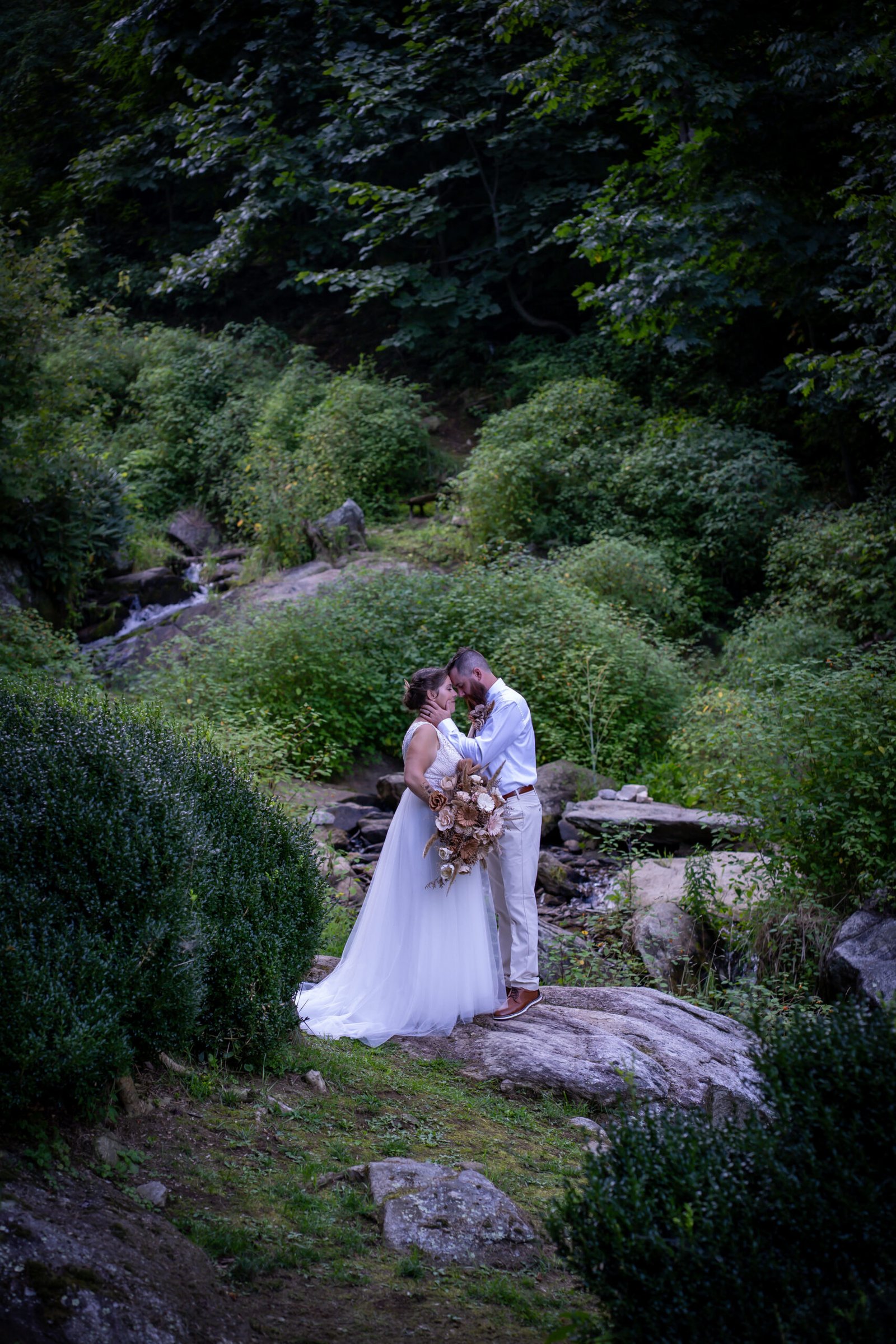
Planning a small wedding in the mountains is simpler than most couples expect — and more rewarding than most imagine. When you remove the pressure of a large guest list and the production requirements of a traditional venue, what’s left is something more personal, more present, and more connected to the setting around you.
This guide walks through how to plan a small wedding in the mountains, step by step, from choosing your location to being present on the day itself.
Step 1: Choose the Right Mountain Location
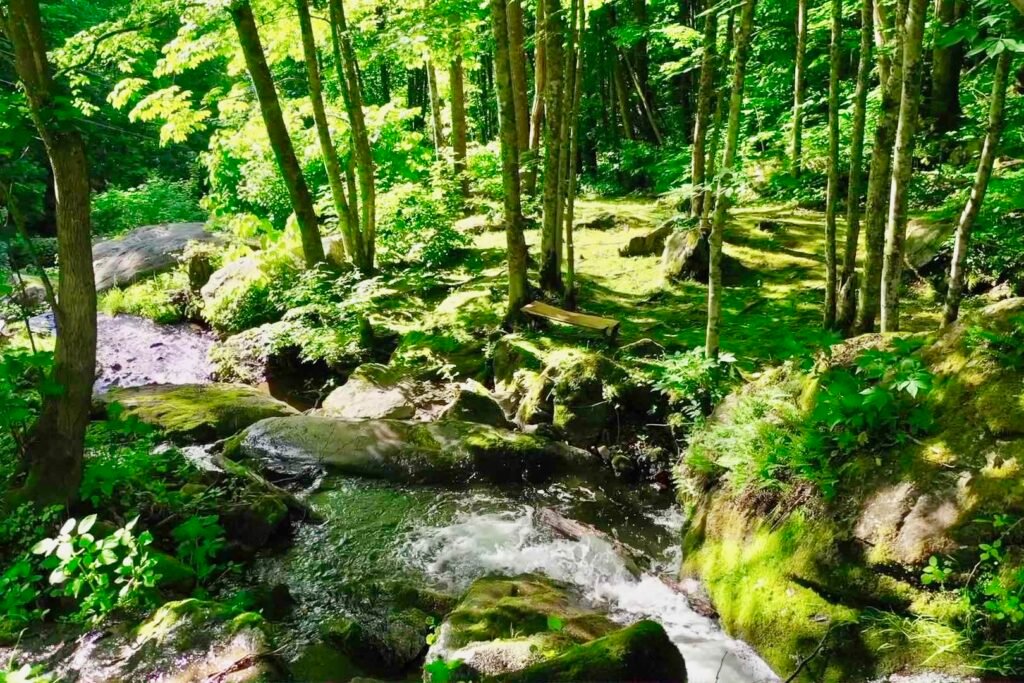
Not all mountain locations offer the same experience. Some are accessible and close to town — convenient for guests traveling in. Others are more secluded, with genuine privacy and deeper immersion in the landscape. Both are valid, but they produce different days.
For most couples planning a small wedding in the mountains, the balance point is a location that feels genuinely removed from everyday life without requiring logistical heroics to reach. Western North Carolina — particularly the Hot Springs area — offers exactly that: real mountain landscape, private property options, and accessibility from Asheville and multiple regional airports.
Things worth evaluating when choosing your location:
- Privacy — shared access versus private land makes a significant difference in atmosphere
- Seasonal weather — mountain conditions vary considerably; some venues are better suited to shoulder seasons than others
- Guest accessibility — how far are people traveling, and what does arrival look like?
- Natural atmosphere — does the setting create its own environment, or does it require significant decoration to feel like something?
If you’re exploring venues in this area, the guide to wedding venues in Hot Springs NC covers what the region offers for small weddings and elopements.
Step 2: Decide Your Guest Count Early
Guest count is the decision that shapes almost everything else in planning a small wedding in the mountains — venue capacity, vendor requirements, budget, and the overall feel of the day.
Small weddings typically run 10–30 guests. Micro weddings sit at the lower end of that range. Elopements bring it down to just the couple, or the couple plus a handful of witnesses.
What fewer guests actually gives you:
- Less coordination — no seating charts, no complex logistics, no managing a crowd
- Lower costs — catering, venue size, and vendor requirements all scale down
- More location flexibility — intimate settings that wouldn’t work for 150 people work beautifully for 20
- More presence — without a large audience to perform for, the ceremony can be genuinely intimate
Deciding early means your venue search, budget planning, and vendor conversations all start from a clear foundation rather than shifting as the number changes.
For couples still working out what size feels right, the comparison of micro wedding vs elopement is worth reading before committing to a direction.
Step 3: Choose a Venue That Works With the Landscape
The best mountain venues don’t fight the landscape — they’re integrated with it. The setting is the design. Waterfalls, forest paths, creekside ceremony spots, and natural light do the atmospheric work that decoration budgets try to manufacture at scale.
When you’re planning a small wedding in the mountains, look for venues where the scenery is the focal point — not a backdrop that needs to be dressed up. A ceremony beside a private waterfall in a forest clearing doesn’t need florals to create atmosphere. The sound, the light, and the setting do that on their own.
Practically, also look for:
- On-site lodging — staying on the property changes the entire experience
- Multiple ceremony locations — flexibility if weather or preference shifts
- Private land — no shared access means no strangers walking through your ceremony
- Established vendor relationships — venues whose teams already know each other produce smoother days
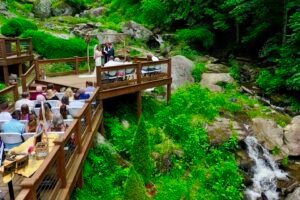
A ceremony at Windows & Weddings Over Waterfalls, Hot Springs NC
Step 4: Build a Simple Timeline
One of the clearest advantages of planning a small wedding in the mountains is that the day doesn’t need a rigid minute-by-minute schedule. A simple structure works better than an over-choreographed one.
A typical small mountain wedding flows through four phases:
- Arrival and getting ready — unhurried, with time to settle into the setting
- Ceremony — in the location you’ve chosen, at the pace you’ve set
- Photos — with a photographer who knows the property and the light
- Relaxed reception or shared meal — without a production timeline driving it
Without a large group to manage, transitions happen naturally. You’re not moving a crowd from point A to point B — you’re moving through a setting that already has its own momentum.
Most couples staying on-site also build in arrival the day before the ceremony. Walking the ceremony location, becoming familiar with the property, and letting the setting feel like yours before the wedding day removes a layer of unfamiliarity that would otherwise surface during the ceremony itself.
Step 5: Keep the Vendor List Short
A traditional wedding might involve 10–12 independent vendors. A small wedding in the mountains typically needs three: photographer, officiant, and venue. Optional additions — florals, hair and makeup, coordination — depend on what matters to you and what your package includes.
All-inclusive packages simplify this further by bundling everything into one experience. For couples planning from out of state, this is often the most practical approach — it removes the need to vet and coordinate vendors in a place you’ve never been, and it means the team already knows each other and knows the property.
The vendors who produce the best results for small mountain weddings are those who’ve worked together before. A photographer who knows the setting will consistently produce better work than one encountering it for the first time.
For questions to ask before committing to a venue or vendor team, the guide to questions to ask your wedding venue is a useful starting point.
Step 6: Plan for Weather Without Stressing About It
Mountain weather is variable — but it’s rarely the disaster couples fear, and at waterfall venues it’s sometimes an enhancement. Rain makes the waterfalls louder and more dramatic. Overcast light is often better for photography than direct sun.
What matters is having a plan rather than trying to control an outcome. Look for venues with:
- Covered areas for getting ready or gathering
- Multiple ceremony locations with different exposure levels
- A coordinator who’s navigated weather before and knows how to adjust without panic
When you know there’s a contingency, the forecast stops being a source of anxiety and becomes something you can simply monitor.
Step 7: Set Realistic Budget Expectations
A small wedding in the mountains is significantly more affordable than a traditional venue-based wedding — but the cost range still varies widely depending on what you include.
At the lower end: a venue-only elopement or small ceremony with a short vendor list. At the higher end: a fully all-inclusive micro wedding with catering, photography, florals, coordination, hair and makeup, and on-site lodging.
At Weddings Over Waterfalls, venue-only small weddings start at $3,500 for up to 30 guests. All-inclusive micro wedding packages start at $8,250. The full pricing page breaks down exactly what’s included at each level.
For couples trying to understand where costs tend to appear unexpectedly, the guide to hidden wedding costs covers the line items most couples don’t think about until they’re already committed.
Step 8: Stay On-Site and Let the Experience Extend
One of the most underused elements of planning a small wedding in the mountains is the opportunity to turn the wedding into a multi-day stay rather than a single-day event.
Staying on the property for two or more nights gives you:
- Time to arrive, settle in, and walk the ceremony location before the day itself
- The morning after — slow, unhurried, in the setting you chose
- A genuine transition into being married rather than a rushed departure
Couples who extend their stay consistently describe it as one of the best decisions in their planning process. The wedding day becomes one part of a longer, more immersive experience rather than a few hours that disappear before you’ve fully arrived in them.
Planning a Small Wedding in the Mountains at Weddings Over Waterfalls
If a private waterfall property in the Blue Ridge Mountains fits what you’re looking for, Weddings Over Waterfalls in Hot Springs, NC offers venue-only and all-inclusive packages designed specifically for small weddings and elopements — not adapted from a large-scale model.
The property is about an hour from Asheville, accessible from three regional airports, and includes multiple waterfall ceremony sites, forest paths, creekside spaces, and on-site lodging. Venue-only small weddings start at $3,500. All-inclusive micro wedding packages start at $8,250.
For couples still in the early stages, the guide to small wedding venues near Asheville is a useful place to compare options before committing to a direction.
Check availability or view full pricing and package details.
Not Getting Married Here? You Can Still Experience It
Even if you choose a different venue, you can still experience the waterfalls, forest, and privacy of the property through a stay at Windows Over Waterfalls.
Even if you’re not planning a wedding here, couples choose to retreat here for a quiet, private stay in the mountains. As a romantic getaway and honeymoon destination, Windows Over Waterfalls offers the chance to unwind beside the falls and fully disconnect in a beautiful, natural setting.
Book Now!