

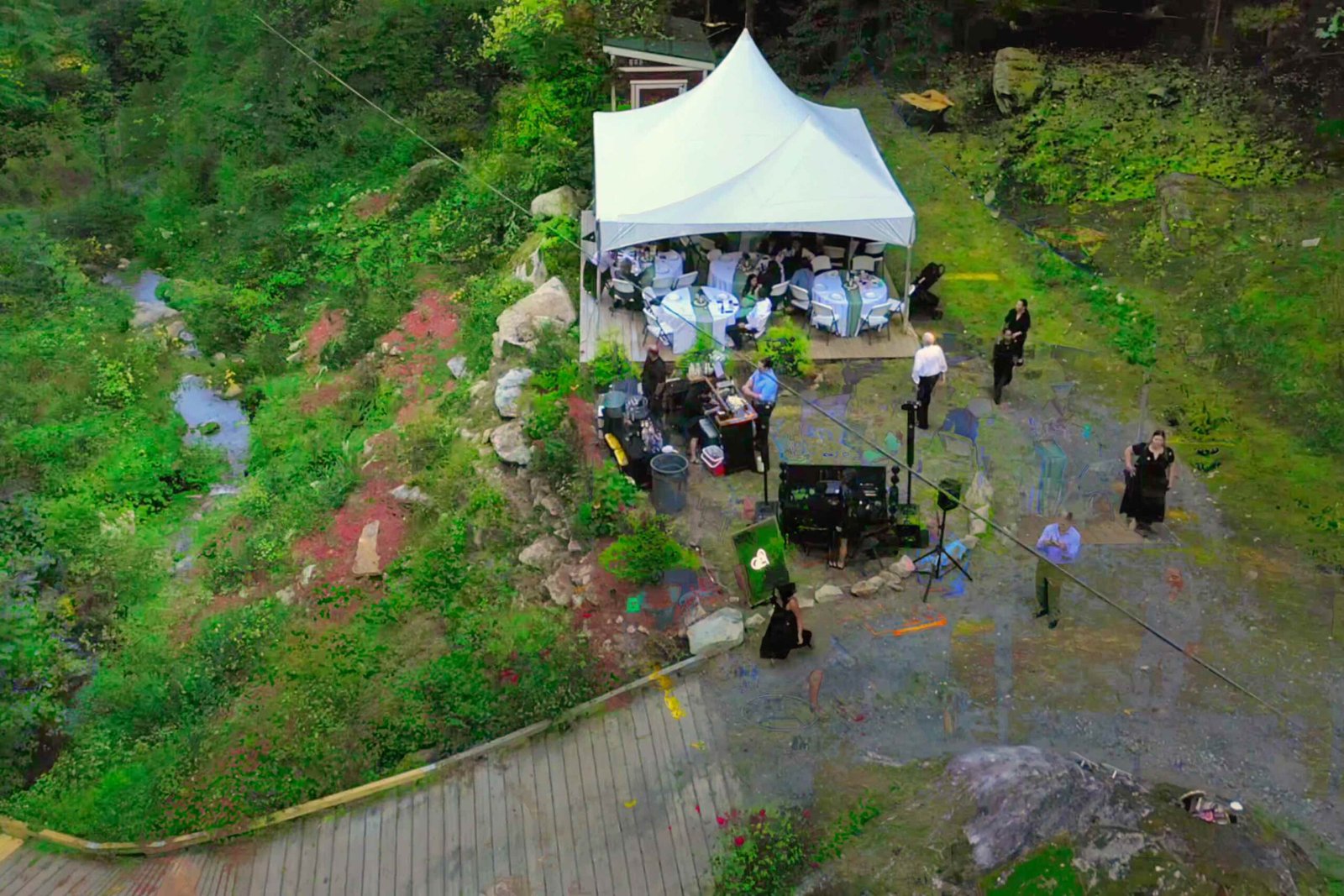
A small wedding timeline doesn’t require a year of logistics and stress. One of the clearest advantages of a smaller, more intentional wedding is how much simpler the planning arc actually is — fewer vendors, fewer moving parts, and a day that can be designed around experience rather than execution.
This guide walks through a realistic small wedding timeline from first decision to wedding day, so you know what to do and when to do it.
What Makes a Small Wedding Timeline Different
A traditional wedding timeline is built around managing scale — coordinating 8–12 vendors, moving 100+ guests through a schedule, and keeping a complex production on track. Every transition is choreographed because it has to be.
A small wedding timeline operates differently. With fewer guests and a shorter vendor list, the day has room to breathe. You’re not managing an event — you’re moving through an experience. The transitions are natural rather than scheduled, and the ceremony itself can be the center of gravity rather than one piece of a larger production.
This difference becomes even more pronounced at destination venues. A small wedding timeline in the mountains gives you longer photo windows, more immersive time in the setting, and a pace that actually lets you be present rather than moving through a checklist.
6–12 Months Out: Choose Your Location and Lock the Date
This is the decision that shapes everything else. Before you think about vendors, florals, or logistics, settle two things: where and when.
For mountain venues and waterfall settings, availability moves faster than most couples expect — especially in peak season (late spring through fall). If you have a specific date or season in mind, this is the phase where you secure it.
Questions worth resolving at this stage:
- Indoor, outdoor, or both? (weather contingency matters more than couples realize)
- How many guests — and does the venue accommodate that number comfortably?
- Do you want lodging on-site, or will guests travel in separately?
- All-inclusive package or venue-only?
Locking venue and date early removes the single biggest variable from your small wedding timeline. Everything downstream becomes easier once those two things are confirmed.
If you’re weighing venue options, the guide to small wedding venues near Asheville NC covers what to look for in a setting designed for intimate ceremonies.
4–6 Months Out: Book Your Vendors

One of the most practical advantages of a small wedding timeline is the dramatically shorter vendor list. A traditional wedding might require 10–12 independent vendors. A small wedding typically needs three:
- Photographer
- Officiant
- Venue (ideally one that already has relationships with both)
Optional additions depending on your package: florals, hair and makeup, coordination. If you’ve chosen an all-inclusive package, most or all of these are already handled — which is why out-of-state couples tend to find the process far simpler than they expected.
The vendors who work best for small weddings are those who know each other and know the venue. A photographer who has shot at the property before will produce better work than one seeing the setting for the first time. An officiant who knows the ceremony sites will move through the day with more confidence.
Book early, communicate clearly, and confirm that everyone understands the timeline and tone you’re looking for.
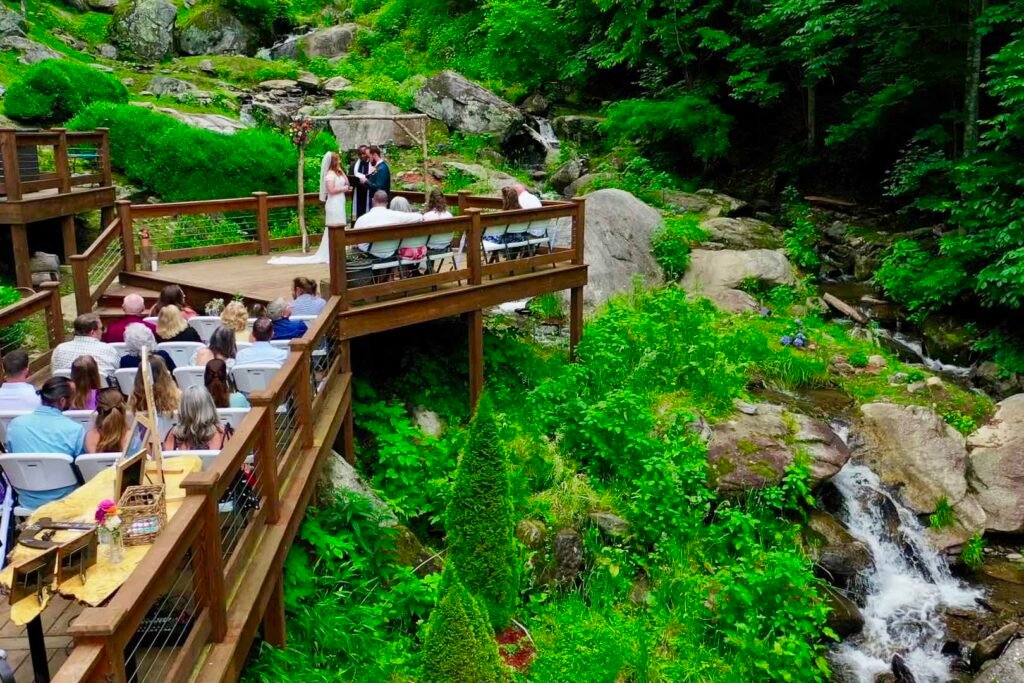
A ceremony at Windows & Weddings Over Waterfalls, Hot Springs NC
2–3 Months Out: Finalize the Details
This is where the small wedding timeline comes together. By this point the major decisions are made — now it’s about confirming the specifics.
- Day-of timeline and ceremony structure
- Guest confirmations and final headcount
- Lodging arrangements for out-of-town guests
- Vow writing, if you’re writing your own
- Any personal touches — readings, rituals, specific requests for the officiant
For small weddings, this phase is usually quick. Because the vendor list is short and the guest count is manageable, there’s far less coordination required than couples expect. Most of this can be handled in a few focused conversations rather than weeks of back-and-forth.
1 Month Out: Confirm and Simplify
One month out, the goal is to remove uncertainty rather than add anything new.
- Confirm all vendors — photographer, officiant, florals, coordination
- Finalize the day-of schedule and share it with anyone who needs it
- Review logistics: travel, parking, arrival times
- Communicate final details to guests
At this point in the small wedding timeline, most of the work is already done. This phase should feel like a quiet review, not a sprint.
1 Week Out: Keep It Calm
The week before the wedding is not the time to add new decisions. Focus on:
- Packing what you need — attire, any personal items for the ceremony
- Confirming final timing with vendors one last time
- Arriving early enough to settle in before the day itself
If you’re staying on-site, arriving the day before the ceremony makes a meaningful difference. Walking the ceremony location, getting familiar with the property, and letting the setting become comfortable before the wedding day removes a layer of unfamiliarity that can otherwise create low-grade stress.
Arrive settled. The day works better when you’re not orienting yourself while it’s happening.
Wedding Day: Let It Move at Its Own Pace
Small weddings don’t need a minute-by-minute schedule. A simple structure works:
- Getting ready — unhurried, with time to be present
- Ceremony — in the location you’ve chosen, at the pace you’ve set
- Photos — with a photographer who knows the setting and the light
- Reception or shared meal — relaxed, without a production timeline driving it
Without a large guest count to manage, the day has natural momentum. Things flow because there’s nothing forcing them into a rigid sequence. This is what couples who’ve experienced both a large wedding and a small one consistently describe as the clearest difference — not just the scale, but the feeling of actually being present in it.
After the Wedding: Stay and Let It Land
One of the most underused advantages in a small wedding timeline is the day after. Don’t book a departure for the evening of the ceremony.
The transition into being married is worth having time for — time to walk the property again, sleep in, have a slow morning in the setting you chose. Couples who extend their stay by even one night consistently describe it as one of the best decisions they made.
If you’re interested in extending the experience into a longer mountain getaway, Windows Over Waterfalls offers private cabin stays on the same property — designed for exactly that kind of unhurried time.
Planning a Small Wedding Timeline at a Waterfall Venue in NC
If you’re looking for a venue where this kind of timeline is already built in, Weddings Over Waterfalls in Hot Springs, NC offers venue-only and all-inclusive packages on a private waterfall property about an hour from Asheville.
Venue-only small weddings start at $3,500 for up to 30 guests. All-inclusive micro wedding packages — which include catering, photography, officiant, florals, and coordination — start at $8,250. The full pricing and package details are worth reviewing early in your planning process.
For couples still working through the broader picture, the guide to how to plan a small wedding covers the full process from first decisions through wedding day.
Check availability or view full pricing and package details.
Not Getting Married Here? You Can Still Experience It
Even if you choose a different venue, you can still experience the waterfalls, forest, and privacy of the property through a stay at Windows Over Waterfalls.
Plan a Romantic Getaway Instead
Airbnb designates this as a top 10% home — their designation, not ours · Guest Favorite · Superhost
What Airbnb Guests Are Saying
★ 4.97
243 Five-Star Reviews
243 Reasons to Book With Confidence
As of June 2026 — and still growing.