
Couples searching for destination wedding locations aren’t looking for a framework. They want a real list — actual places, with enough detail to picture themselves there. That’s what this guide is: 10 of the best destination wedding locations across the U.S., covering mountains, coast, countryside, and everything in between.
We’ve included what makes each location worth considering, what it costs to pull off, and who it’s genuinely right for.
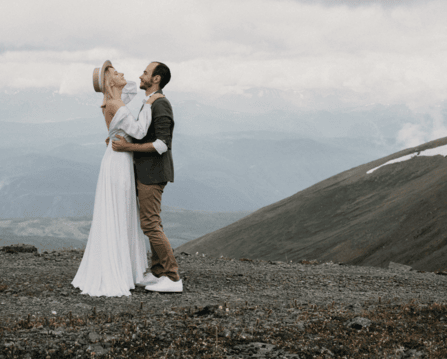
A ceremony at Windows & Weddings Over Waterfalls, Hot Springs NC
This guide isn’t a generic top-10 list padded with stock photos. It’s ten real categories of destination wedding locations across the country — mountain, coastal, countryside, urban — with what each one actually costs, who it’s genuinely right for, and the tradeoffs nobody puts in the brochure.
Mountain Destination Wedding Locations
Mountain settings are consistently among the most searched destination wedding locations, and not just for the views. Elevation, tree cover, moving water, and changing light create atmosphere that’s expensive to manufacture at a traditional venue and barely needs decoration to feel complete.
Hot Springs, North Carolina — Waterfall Weddings in the Blue Ridge Mountains. Hot Springs sits in a narrow river valley about an hour west of Asheville — small, quiet, and almost entirely unknown outside the region, which is exactly what makes it work. Private waterfall venues here let couples hold a ceremony at the base of an actual waterfall with no other guests, no neighboring property in view, and no back-to-back event schedule pushing them out the door.
All-inclusive elopement packages at Weddings Over Waterfalls start at $4,400 and cover the full venue, photography, officiant, coordinator, florals, cake, and hair and makeup for a two-night minimoon — making it one of the most complete destination wedding options in the country for the price. Couples typically fly into Asheville (AVL), rent a car, and drive about an hour west.
Best for: Couples who want a waterfall ceremony, genuine privacy, and an experience that’s already assembled rather than self-coordinated.
Guest count: Elopements to small weddings, up to 30 guests
Starting cost: $4,400 all-inclusive (elopement); $950 venue-only
Asheville, North Carolina — Mountain City with Full Vendor Infrastructure. Asheville itself is one of the most popular mountain wedding destinations in the country — a full vendor ecosystem, a walkable downtown with dozens of hotels, and the Blue Ridge Parkway running along its edge. Pricing runs higher than the surrounding mountains, often $5,000–$15,000+ for venue-only, but the infrastructure means assembling a full wedding is genuinely easier. For couples weighing city convenience against a more private setting nearby, our guide to small wedding venues near Asheville breaks down both directions.
Best for: Couples who want mountain aesthetics with urban convenience and a full vendor team.
Guest count: 20 to 150+
Starting cost: $5,000–$15,000 venue-only
Smoky Mountains, Tennessee — High Traffic but Undeniable Drama. The Tennessee Smokies are among the most searched destination wedding locations in the country. Gatlinburg and Pigeon Forge have entire chapel industries built around elopements, and fall color rivals anywhere in the U.S. The tradeoff is crowds — millions of tourists annually, venues that fill fast, and pricing that reflects the demand.
Best for: Couples who prioritize dramatic scenery and easy travel access for guests.
Guest count: Elopements to large weddings
Starting cost: From $500 (chapel) to $8,000+ (private venue)
Already Sold on the Mountains?
See what an all-inclusive waterfall elopement actually includes — and what it costs.
Coastal Destination Wedding Locations
Outer Banks, North Carolina — Coastal Character with Beach Ceremony Permits. The Outer Banks offer a wilder, less developed coastal wedding than Florida or California — lighthouse backdrops, wide beach access, genuine ocean views on both sides of the road. Cape Hatteras National Seashore issues ceremony permits. Logistics take planning: it’s a drive-only destination with no airport, and hurricane season is a real fall risk.
Best for: East Coast couples who want beach character without South Florida pricing.
Guest count: Elopements to mid-size weddings
Starting cost: From $500 (permit) to $8,000+ (private venue)
Charleston, South Carolina — Historic Lowcountry with Timeless Venues. Charleston consistently ranks among the top destination wedding cities in the U.S. Antebellum mansions, plantation estates, cobblestone streets, Spanish moss — a Southern character that’s hard to replicate elsewhere, with a vendor community that’s mature and experienced with out-of-town couples. Summer heat is a real planning factor; spring and fall are the premium seasons, and popular venues book 12–18 months out.
Best for: Couples who want historic Southern character with a full-service vendor ecosystem.
Guest count: 30 to 200+
Starting cost: $6,000–$20,000+ venue-only
Maui, Hawaii — Remote Island Weddings with Unmatched Natural Drama. Maui is the most logistically demanding option on this list — flights, lodging, and vendor costs all reflect the remoteness — but also the most visually distinctive. Black sand beaches, volcanic cliffs, jungle waterfall settings, offshore sunsets. Permit requirements vary by location, and Hawaii-based coordinators are worth the cost for out-of-state couples navigating it.
Best for: Couples for whom visuals and destination experience outweigh budget efficiency.
Guest count: Elopements to mid-size destination weddings
Starting cost: $5,000–$25,000+ depending on scale
Countryside & Wine Country Destination Wedding Locations
Napa Valley, California — Wine Country Weddings with Built-In Romance. Napa is expensive, no softening that. But it delivers something hard to find elsewhere: working wineries as ceremony and reception venues, world-class catering built around local ingredients, and a landscape that photographs beautifully in any season. Shoulder season (February–April, October–November) offers better pricing and availability than peak summer.
Best for: Couples who want wine country settings and don’t have a strict budget ceiling.
Guest count: 30 to 100+
Starting cost: $10,000–$30,000+
Hudson Valley, New York — Pastoral Settings Close to the City. One of the most active destination wedding markets in the Northeast, driven largely by NYC couples wanting pastoral settings within two hours of home. Converted barns, historic estates, farm properties, and riverside venues line both banks of the Hudson. Fall foliage is excellent and competition for fall dates is intense — book 12–18 months out.
Best for: Northeast couples who want countryside settings with easy guest access from NYC.
Guest count: 50 to 150+
Starting cost: $8,000–$20,000+ venue-only
Unconventional Destination Wedding Locations
Sedona, Arizona — Red Rocks and Desert Ceremony Settings. Sedona is unlike anywhere else in the country for weddings. The red rock formations — Cathedral Rock, Bell Rock, Chapel of the Holy Cross — create a backdrop that photographs unlike any other landscape, with warm dry weather most of the year. Permits for Coconino National Forest can take weeks to secure, and the town’s popularity means lodging books fast.
Best for: Couples drawn to dramatic, unconventional landscapes and desert color palettes.
Guest count: Elopements to mid-size weddings
Starting cost: $3,000–$12,000+
Glacier National Park, Montana — Wilderness Elopements at Elevation. For couples who genuinely want wilderness, not “rustic venue” wilderness but actual backcountry. The park issues wedding permits for specific ceremony locations, with alpine scenery — glacier-carved valleys, turquoise lakes, Going-to-the-Sun Road — among the most dramatic in North America. The main road closes October through late spring, and summer brings real crowds with required vehicle reservations.
Best for: Couples who want genuine wilderness and are comfortable with minimal logistics support.
Guest count: Elopements and very small ceremonies
Starting cost: From $400 (permit) plus travel
How to Choose Between These Destination Wedding Locations
The right location comes down to three things: what kind of scenery you actually want to get married in, how far you’re willing to ask guests to travel, and how much of your budget you want going to logistics versus experience.
Mountain waterfall settings like Hot Springs offer the most complete experience for the money — private, visually dramatic, and an all-inclusive structure that removes most of the planning burden upfront. Coastal and wine country options bring more built-in vendor infrastructure, at a real cost premium. National park settings bring the most dramatic scenery and the least support — worth it only if you’re comfortable handling logistics yourself.
If a private mountain waterfall property is closer to what you’re picturing, our guide to waterfall wedding venues in NC goes deeper on what that actually looks like day-to-day, and the full pricing breakdown covers what’s included at every package level.
Not Getting Married Here? You Can Still Experience It
Even if you choose a different venue, you can still experience the waterfalls, forest, and privacy of the property through a stay at Windows Over Waterfalls.
Plan a Romantic Getaway Instead
Airbnb designates this as a top 10% home — their designation, not ours · Guest Favorite · Superhost
What Airbnb Guests Are Saying
★ 4.97
243 Five-Star Reviews
243 Reasons to Book With Confidence
As of June 2026 — and still growing.